Sunday, March 18, 2007

“Best kept secret in today's world economy"


Take out all the negative information about your continent from your mind. Allow me to share positive information about our Africa.

Africa is one of the second largest continents in the world. Africa is larger than China, USA, and Europe combined. The continent is also the least crowded place on earth.

Africa is the richest in human and natural sources. There are so many African workers and intellectuals who built Africa and other continents. United States of America was built by Africans. As soon as the door to the Noble Prize started opening for Africans in the 1950s, after colonialism and slavery, Africans were able to demonstrate to the world their excellence in sciences, arts and peace making.

Other natural resources in Africa include ancient books, medicine, diamond, gold, petroleum, natural gas, copper, medicines, cobalt, uranium, lead, potash, forest, coltan and many more others minerals. Eighty percent of the world’s known reserves of coltan are found in Africa. Coltan in used as a “vital components in electronic devices, ranging widely from mobile phones to laptop computers,” according to wikipedia.org.

Mostly non Africans are currently making most money for their investment in Africa. According to the UN Secretary-General Kofi Annan, "Africa's profitability is one of the best kept secrets in today's world economy."

Now it is our time to make a profit from our continent. Let’s invest our time, money, and knowledge in our continent. Even if we cannot trade, open factories, educate people, or move to Africa now, we can start thinking positively about Africa prosperity and unity. Globalization forces us to become broad minded. Division limits our growth. Our culture also directs us to choose unity.


Picture source: http://www.etiopiamagica.it/fiori1.htm

Monday, February 26, 2007

African Film Festival - 8


Danny Glover participated on the Eighth African Film Festival, which took place in Boston from Febraury 16 to Febrauary 25, 2007.

According to MFA, Mr. Glover through his company, Louverture, produced Abderrahmane Sissako's latest film, "Bamako." Mr. Glover also acted in the film. Mr. Glover decided to work with Sissako on "Bamako" because "It attempts to present the reality of what is happening to people, while at the same time clarifying the macroeconomic context that creates that reality," he said.

Mr. Glover’s company, Louverture, is dedicated to the development and production of films of historical relevance, social purpose, commercial value, and artistic integrity.

Mr. Glover is also a dedicated Pan-Africanist. His presence in many African related events and in Africa is appreciated by many Africans.

He is also the current chairperson of TransAfrica Forum, which is an organization that serves as a major research, educational, and organizing institution for the African-American community offering constructive analyses of issues concerning U.S. policy as it affects Africa and the Diaspora in the Caribbean and Latin America.

Monday, January 15, 2007

Ethiopian Returnees Give Hope


By Eliab Tarkghen

Semira is 13 years old and aspires to be a writer. She writes poems, stories and dramas. In fact she is working on a book. Her book will be about the struggle and battle of living with HIV and also sort of How-To-Guide. You see Semira is writing from experience. She is a living proof that one can lead a normal life even after being infected with HIV. Semira's story is not unique among the 13 other kids who live with her in a family style run charity by Artists For Charity (AFC). Started by Abezash, with her fellow artists Suilman and Mekeda, all returnees from the U.S, the charity feels more like a close-knit family than an orphanage. Indeed the word Orphanage feels cold, distant and heartless, and Abezash herself detest the usage of it.

All the kids came to the AFC family after loosing both their parents to the AIDS epidemic. Neglected by relatives and left to fend for themselves, some of the kids would have died if it was not for AFC. At AFC one can easily see the care that is provided to these kids. Medicine, proper nutrition and a full time Nurse is a priority. In fact when the kids arrive to AFC, most are underweight, some have low white blood cell count (WBC), and some have open soars on their body. With tender care and proper nutrition AFC helps these kids recuperate quickly. The average weight gain of AFC kid is 7 kg, and in cases like Semira it is more than weight gain, it is regaining a fighting chance. Semiria has gained 6 kg, and her WBC that was in the low teens now stands at 200. It is still far from being a normal WBC, but it is a start.

One of the many amazing things about AFC is the founders' passion and commitment. Abezash, Sulliman and Mekeda, not only run the organization, but they live with the kids. They have given up their lives in the U.S to nurture, help, and raise these bright kids. In fact the kids call them Mommy and Daddy, a testament to their closeness with the kids. Everything is about honesty, and support. It
is about knowing the true nature of the disease HIV/AIDS, as well as learning to cope with the disease. The kids will be the first one to tell you they have HIV. They know the stigma; but in their own eloquent way they make you understand, it is just another disease.

Currently, 800,000 children have been orphaned by AIDS in Ethiopia. In fact the prediction is gloomy, it is expected by the year 2014, this figure will increase exponentially to 2.5 million. It takes more than
Abezash, Suliman and Mekeda to tackle this grave threat to our nation. But they have started the hard battle for us, it is now in our hands to extend the fight and lessen the suffering of those who are
unfortunate enough to be the victim of HIV/AIDS and its aftermath.

I know Semira will finish her book. I also know one day we will see this bright writer authoring a mouth-dropping novel that may end up being a best seller. Thanks to AFC it is not a dream, but a reality in
the making.

Visit AFC website
http://www.artistsforcharity.org/
http://www.eliabconsulting.com/abezash_kids/index.html


Peace


Thursday, December 28, 2006

Pan-African Colors


The ancient Ethiopian/African flag has a lion on it. The lion represents Jesus Christ, according to the Ethiopian Orthodox Towahdo Church. Many African and South American flags’ are inspired by the above Ethiopian flag. The colors, green, yellow, and red became known as the Pan-African colors, because Ethiopia was able to defeat colonialism.

Countries that have the Pan-African colors on their flags include Angola, Benin, Burkina Faso, Cameroon, Central African Republic, Chad, Congo, Ghana, Guinea, Guyana, Guinea Bissau, Mali, Mozambique, Rwanda, Senegal, São Tomé and Príncipe, Togo, Zambia, and Zimbabwe. The following Flag is one example from Zimbabwe.


The inclusion of the Pan-African colors in many countries’ flag is one of the testaments to the unbreakable bondage that still exist amongst Africans internationally. What do you feel about the Pan-African collors?

Peace on Africa.

Friday, December 01, 2006

Ethiopia Loves Langston Hughes

The Love is mutual!


As it is evident in many of his works, on the poem bellow, Langston Hughes writes positively about Africa. Some Africans are currently translating Langston Hughes' poems to different African languages.


The Negro Speaks of Rivers

I've known rivers:
I've known rivers ancient as the world and older than the flow
of human blood in human veins.

My soul has grown deep like the rivers.

I bathed in the Euphrates when dawns were young.
I built my hut near the Congo and it lulled me to sleep.

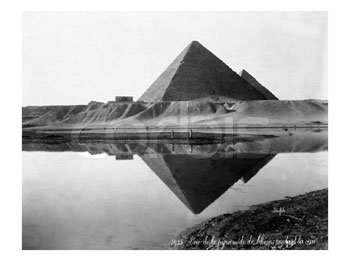
I looked upon the Nile and raised the pyramids above it.
I heard the singing of the Mississippi when Abe Lincoln went
down to New Orleans, and I've seen its muddy bosom turn
all golden in the sunset.

I've known rivers:
Ancient, dusky rivers.

My soul has grown deep like the rivers.


-- Langston Hughes

One of the rivers that Langston Hughes wrote about is the Nile river that is found in East Africa and is the longest river on earth.

The Nile River is mentioned as flowing out of the Garden of Eden in the Bible. Here are some pictures of the magnificent Nile, also know as Abay and Ghion River.


Monday, November 27, 2006

How big is Africa?

Africa is one of the largest content in the world. Africa is larger than China, USA, and Europe combanied. The continent is also the least crowded place on earth.

The involuntary and semi voluntary migration out of Africa continue to weaken the mother land.

As one African singer reminisces:

“Since you (the African Diaspora) are gone,
it has been such an empty home.
Come on back to where you once belonged.
You are always welcome home.
Welcome home...”

To hear this lovely and empowering song tune into Kofi Dompere's African Rhythms radio show, every Sunday at 10:00pm. You can find the radio show at www.wpfw.org

We thank Alah for giving us such a beautiful, rich and enormous continent. And we ask God to give us the wisdom to enjoy our land.


Source: http://www.bu.edu/
EgziAbhear African Tebek

Sunday, November 19, 2006

African Americans' Gift to the World


Menghistu Lemma's poem “Basha Ashebir in America” vividly recounts the experience of Basha Ashebir, an Ethiopian diplomat who was thrown out of a whites-only restaurants in Washington DC, in the early 1950s. After a verbal confrontation with the restaurant manager, Basha Ashebir had to resort to using his stick, to no avail. Seeing how Basha was perplexed by the ordeal, it was an African American who explained to him why the manager refused to serve him and eventually kicked him out: becuase of his skin color.

Learning from each other is not new for African Americans and Ethiopians. As far back as the 18th century, Ethiopians and African Americans have worked together. To move away from the segregated setting of the Church, they established the Abyssinian Baptist Church, which became the first African American Baptist congregation in New York and the fourth in the nation. Similarly, in 1930s Harlem, African Americans rallied around Dr. Malaku Bayen, Ethiopia’s envoy to the Black World, to help him put an end to Fascist Italy’s invasion of Ethiopia throught the Ethiopian World Federation.

Furthermore, thanks to great civil and human rights advocates such as Malcolm X, Martin Luther King and countless generations of conscious individuals who fought discrimination, African immigrants are able to take advantage of political and economic refuge in the United States. Nowadays, not only can Ethiopians eat at any restaurant, they are also the proud owners of African restaurants all over the United States.

Ethiopian artists and scholars in the Diaspora also drew their inspiration from the African American experience. Haile Gerima, who lives and works a pan-African life, learned from decades of personal encounters with African American issues and personalities. Haile, who teaches film at Howard University, has in his film Sankofa, taken us on the harrowing journey African Americans took through the middle passage and struggling through the arduous life of an African slave in an American plantation. Throught the movie Sankofa, we are re-born anew by the rediscovery, grounded in the present but connected to the past and to the spirits of our ancestors.

Skunder, which we will publish his history on this blog soon, also studied and often discussed the African American experience as it related to Africa. He voraciously consumed and learned from all African American creative productions. Through studying Black music from childhood, he incorporated what he learned from Jazz and Blues to his art. Hearing Ornette Coleman and Miles Davies create their own unique and revolutionary improvisational Jazz, Skunder similarly revolutionize African traditional art.

Continuing to work together improves the likelihood that our children will have role models, philosophers, historians, architects, scientists, artists and freedom fighters, that look like them. Then, we can start to utilize our bestowed gifts and by doing so, give back to the Black culture that nurtures us.

In this spirit, Ephraim Isaac, one of the first Africans to obtain a PhD at Harvard, and establish the African American department there, stresses the importance of mobilizing the Greater African Diaspora to celebrate the upcoming Ethiopian Millennium. The Ethiopian Calendar, which turns 2000 in less than one year, is one aspect of the rich Black heritage that goes back to the birth of humankind.

What better way to thank Dr. King and countless others for their brave vision, than to celebrate this Black Millennium and to fulfill the dreams of visionaries who had used Ethiopia as a rallying call for freedom, justice and peace. For it is one of the things that can continue to shape our shared experience, and most importantly, works to unite us.

In the words of Menghistu Lemma, the Black Diaspora should focus on what unites us: understanding that we are one people with different names.

The Amharic Version of the poem, coming soon.

Thursday, September 14, 2006

Safori’s Colorful & Soulful Art


Safori will exhibit his art at the Artful Gallery from September 22 to October 21, 2006. The opening reception will be held on Friday September 22, 2006 from 6:30 to 9:30pm.

Artful Gallery is located at 1349 Maryland Ave, NE, Washington DC 20002.

To find out about this colorful artists visit the following website:
http://www.houseofsafori.com/biography.htm

African Union Flag & Anthem


AFRICAN UNION ANTHEM

Let us all unite and celebrate together
The victories won for our liberation
Let us dedicate ourselves to rise together
To defend our liberty and unity

O Sons and Daughters of Africa
Flesh of the Sun and Flesh of the Sky
Let us make Africa the Tree of Life

Let us all unite and sing together
To uphold the bonds that frame our destiny
Let us dedicate ourselves to fight together
For lasting peace and justice on earth

O Sons and Daughters of Africa
Flesh of the Sun and Flesh of the Sky
Let us Make Africa the Tree of Life


Let us all unite and toil together
To give the best we have to Africa
The cradle of mankind and fount of culture
Our pride and hope at break of dawn

O Sons and Daughters of Africa
Flesh of the Sun and Flesh of the Sky
Let us make Africa the Tree of Life

The Nitty Gritty of African Unity


On September 2006 the African Union will conduct a seminar to harmonize statistics throughout Africa. The seminar will be held in Bamako, Mali. The African Union invites all national statistics offices and regional Economic Communities to attend.

Thursday, August 17, 2006

Abezash - Amen


Creativity + wisdom + beauty + courage + compassion + action = Abezash T.

To meet this inspiring artist and the epitome of a fine human being, be on the look out for the 4th Annual Blen Art show, in Washington, DC: blenartshow.com

Also check out Abezash’s fruitful organization at: http://www.artistsforcharity.org

Monday, August 07, 2006

Congo: The Heart of Africa


Many African countries claim to be the heart of Africa, including Malawi, which is probably the thigh.

As the heart is essential for the transportation of oxygen throughout the body, Congo is important for Africans to move freely throughout the continent.

It is difficult to travel from southern to northern or from eastern to western Africa, with out passing through the green and beautiful Congo or its neighboring counties. Without the free movement of the Africans, it is imposible to create mutually beneficial economic ties between different African people. That is why Congo is the heart of Africa.

Additionally, Congo is one of the richest countries in the world. Found the in center of Africa, now Democratic Republic of the Congo (DRC) was formerly known as Zaire.

DRC is home to the second longest river in the world, the Congo River. The longest river is also found in Africa and its name is the Nail River. As the heart is the provider of the power needed for life, the Congo River has one of the highest potential to produce hydropower that could light the entire Africa.

Other natural resources in DRC include diamond, gold, petroleum, natural gas, copper, cobalt, uranium, lead, potash, forest, coltan and many more discovered and undiscovered precious minerals. Eighty percent of the world’s known reserves of coltan is found in DRC. Coltan in used as a “vital components in electronic devices, ranging widely from mobile phones to laptop computers,” according to wikipedia.org.

DRC is also rich in human resources.

Not only rich in minerals, forest, and water, but DRC is also blessed in arts. For example, the National Geography describes Congo as “one of the most musically fertile regions on earth.” “Congolese music is sexy…. In Congo, almost everyone can dance or sing.,” reports the Economist.

DRC is also blessed with many revolutionary intellectuals such as Marie-Léontine Tsibinda Bilombo, Pierre Mumbere Mujomba, Jean-Baptiste Tati-Loutard, Kamanda Kama Sywor, and many more. My favorite writer is Philippe Wamba, who is father is Congolese and his mother is African America.


Unfortunately, most of these valuable resources are extracted and exported cheaply and rarely are used to develop the content.

Since 1961, after the assassination of a competent leader who fought for DRC’s independence - Patris Lumumba, DRC became a place where civil wars and other countries’ wars were fought.

“This [conflicts] has been fueled and supported by various national and international corporations and other regimes which have an interest in the outcome of the conflict,” according to globalissues.org

There is a glimpse of hope in DRC, therefore there is a hope for peaceful and progressive Africa, since DRC is the heart of Africa. Different rebel leaders, who once fought each other furiously, have now agreed to hold elections.

To read more about DRC’s election go to www.blackstarnews.com

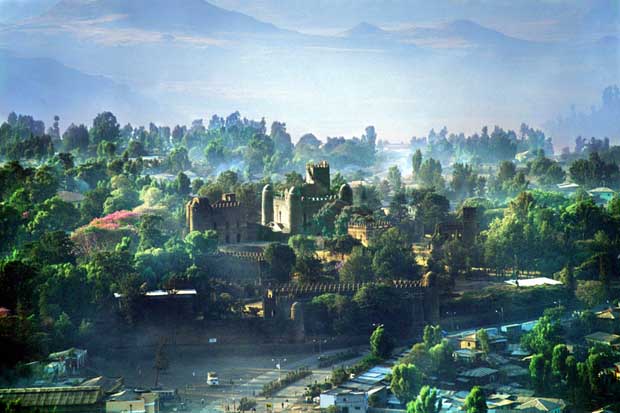
Gonder, Ethiopia


Source: http://www.etiopiamagica.it/index.htm

Tuesday, August 01, 2006

The Precious Advocate for Africa


Dr. Leonard H. Robinson, an advocate for progressive and peaceful Africa, passed away on Tuesday July 25, 2006 in Washington, DC. He was 63.

"He was a true servant of the public, whose leadership and dedication changed lives on two different continents….….He was committed to making Africa a full partner in the global community," said Judith McHale, president and CEO of Discovery Communications.

Dr. Robinson’s carrier in civil service started in the early 1960s as a Peace Corps volunteer in India from 1964 to 1967. Among many posts he held in the U.S. government, he served two terms as deputy assistant secretary of State for Africa.

In themid 1980s, he was a member of the Council on Foreign Relations.

Additionally, for six years, Dr. Robinson served as president of the U.S. African Development Foundation, which was established by Congress in 1981 to provide financial assistance for grassroots enterprises in Africa.

In early 1990s, he coordinated U.S. policy toward parts of Africa. He demonstrated his superior work in conflict resolution as the director of U.S. diplomatic efforts to end Liberia's civil war.

In 1997, Robinson established the LHR International Group, which is a firm that provided consulting services for African and Asian leaders.

To expand his effort to build support for African the United States, he joined the National Summit on Africa as a board member the same year. Mr. Robinson was also advisory councils of the National Peace Corps Association, and Discovery Channel's Global Education Fund.

In 2001, Mr. Robinson and colleagues founded The Africa Society. The mission of the Africa Society is to educate Americans about the greatness and the resourcefulness of Africa.

In 2004, the University of Virginia appointed Robinson as its first Diplomat Scholar in Residence.

Dr. Robinson was born in North Carolina. He attended Ohio State University and the State University of New York, Binghamton, the American University and Harvard's John F. Kennedy School of Government.

He received two honorary doctoral degrees and taught African Studies at the University of Massachusetts.

Among many of his valuable contribution to the development of Africa, his work on conflict resolution is important for the current and future generation. To mention some of his findings, “Simply put: the wars in Africa must stop!! (there are hopeful signs that resolutions are occurring in at least nine (9) conflict zones)… African-Americans - - as the core of the African Diaspora can and have played critical roles in helping to resolve and prevent conflict in Africa.”

According to The Africa Society, “Robinson is survived by two daughters, Rani Robinson of Washington, DC, Kemberley Robinson of Houston, Texas, his mother, Winnie T. Robinson of Durham, North Carolina, and a brother, Dr. Michael Robinson of Los Angeles, California.

A memorial service will be held on August 15 at the National Cathedral in Washington, DC at 10:30 am. Former U.S. Ambassador to the United Nations Andrew Young, who is chair emeritus of the Africa Society board, is scheduled to deliver the eulogy.”

Wednesday, July 26, 2006

The Candle


Journalist, Bapuwa Mwamba, was assassinated in Kinshasa on July 10, 2006.

Congolese journalists stopped working on July 18, 2006 to protest Mr. Mwamba’s killing.

Bapuwa Mwamba always yearned to return to his homeland while he was living in France. Eventually, he returned to Democratic Republic of Congo to directly contribute to the development of his land.

May God bless his soul and his effort to help Africa.

Monday, July 24, 2006

Brazil hosted Pan-African Intellectuals


The President of Brazil, Mr. Luiz Inácio Lula da Silva, hosted the Second Conference of Intellectuals from African and the Diaspora (CIAD) from 12 to 14 July 2006.

CIAD took place in Salvador, which is one of the predominantly black cities in Brazil.

The event was co-chaired by the Minister of Culture of Brazil, Gilberto Gil, representing the Diaspora, and Kenya's Wangari Maathai, 2004 Nobel Peace Price Laureate, representing the African Continent.

The general theme was “The Diaspora and African Renaissance,” aiming to create a strong working relationship between the Africans and the African Diaspora intellectuals.

African Union (AU) Commission Chairperson, Alpha Oumar Konaré, stated that although physically separated, Africans and the African Diaspora share the same values, history, culture, and destiny.

Mr. Konaré also expressed the belief that Africa's renaissance cannot be realized without the contribution of intellectuals from Africa and the Diaspora, and explained that the continent's fate will be transformed by solutions developed by Africans and implemented by Africans.

The "Salvador Declaration" was adopted at the end of the conference, which announced that Africa's Diaspora, scattered across the planet, has an essential role in the African renaissance and aspired to strengthen departments in African Union that deal with the Diaspora.

Participants included heads of states, ministers, Noble Prize winners, scientists, and many other Black intellectuals from around the world.

Prime minister Mrs. Portia Simpson-Miller of Jamaica, presidents Festus Mogae of Botswana, Pedro Pires of Cape Verde, Teodoro Obiang Nguema of Equatorial-Guinea and John Kufuor of Ghana, and Abdoulaye Wade of Senegal were among the leaders who participated on the conference. The total number of participants was estimated to be between 1,000-1,500 people.

The first CIAD was held in Dakar, Senegal, in October 2004. Brazil was selected to host the second CIAD because it is one of the countries with a large African population outside of Africa.

Wednesday, July 12, 2006

The President of Africa


The Pan-African Parliament elected the Dr. Getrude Mongela as the first president of Africa under the African Union. Dr. Mongela will be the highest ranking person in Africa until her term is over in 2009.

She is known around the world as “Mama Beijing.”

The Pan-African Parliament is one of the most important organs in the African Union because it is expected to unify Africa and the African Diaspora politically, economically and socially. The African Union inaugurated the Pan-African Parliament in Addis Ababa, Ethiopia, on March 18, 2004.

Most Africans who have heard about this gigantic legislative body are excited that the Pan-African Parliament will eventually have full law making and governing power over the individual African countries starting in 2009.

Dr. Mongela is expected to build up the current the Pan-African Parliament that has consultative and advisory powers only to a full Pan-African legislative office. The Pan-African Parliament (PAP) is run by legislators from 44 African counties.[1] Each African country is expected to bring five representatives to the Pan-African Parliament.

By law, at least one of the five representatives must be a woman.

Up until June 2006, the PAP also has four Vice-Presidents: Prof F. Jose Dias Van-Du’Nem, an Angolan, in charge of Southern Africa; Dr. Mohammed Lutfi Farahat, a Libyan, responsible for Northern Africa; Mrs. Loum N. Ne’loumsei Elise, a Chadian, in charge of Central Africa; and Mr. Jerome Sacca Kina Guezere, a Beninois, responsible for the west Africa.

The President of the PAP, Gertrude Mongella, is a Tanzanian woman. She is married and has four children.

She is also an international figure who has demonstrated her superior skills as a teacher, a human rights activist, peace maker, experienced diplomat, and strong politician.
Dr. Mongela has promised to work on conflict resolution, poverty reduction, and fighting HIV/AIDS in Africa. She has demonstrated ability to transform words into action on the international stage.

“She took an active leading role in setting up a mechanism which enables African women to participate effectively, at all decision-making levels, in the continent’s peace and development process,” according to the African Union.

In addition, her commitment to helping women around the word, specifically in China has earned her a pleasant nick name: “Mama Beijing.”

"If you want to be a leader, you have to be clear what you want and what you stand for. You must stand for principle. Principle will never let you down … You have to be able to choose what are the principles worth dying for … And you have to add on a little sacrifice. Leadership needs a lot of sacrifice - personal and public sacrifice."
Dr. Getrude Mongela


__________

[1] The 44 countries that are part of the Pan-African Parliament are Angola, Benin, Botswana, Burkina Faso, Burundi, Cameroon, Cape Verde, Central African Republic, Chad, Republic of Congo, Djibouti, Equatorial Guinea, Egypt, Ethiopia, Gabon, The Gambia, Ghana, Guinea, Kenya, Lesotho, Libya, Madagascar, Malawi, Mali, Mauritania, Mauritius, Mozambique, Namibia, Niger, Nigeria, Rwanda, Saharawi Arab Democratic Republic, Senegal, Sierra Leone, Somalia, South Africa, Sudan, Tanzania, Togo, Tunisia, Uganda, Zambia, and Zimbabwe. The list is expected to increase and include the African Diaspora.


Mandela & Ethiopia


"Ethiopia, always has a special place in my imagination and the prospect of visiting Ethiopia attracted me more strongly than a trip to France, England and America combined!!!"
Nelson Mandela

Friday, June 30, 2006

> 17 African Noble Laureates

Since the 1950s, more than eighteen Africans have become Noble Laureates. Because of colonialism, slavery, and discrimination, Africans and the African Diaspora didn’t have much opportunity to participate in the Noble Prize until recentle. However, as soon as the door to the Noble Prize started opening to Africans in the 1950s, they were able to demonstrate to the world their excellence in arts and peace making.

Here are some Africans whose intelligence’s have earned them international recognition.

Kofi Annan: in 2001 received the Noble Prize for promoting peace.

Ralph Bunche in 1950 for working on peace building.

John Maxwell (JM) Coetzee in 2003 received the literary prize.

Mohamed ElBaradei in 2005 received the Nobel peace prize for his attempt to prevent nuclear energy from being used for military purposes. He is the head of the International Atomic Energy Agency.

Nadin Gordimer in 1991 received Nobel Prize for her novels and her epic short stories.

FW de Klerk in 1993 was a recipient of the Noble Prize for ending apartheid.

Sir Arthur Lewis in 1979 for Economics.

Albert John Luthuli in the 1960s received the Novel Prize for a non violence civil rights leadership in South Africa

Martin Luther King Jr. in 1964 for his fight for human rights and for international peace.

Wangari Maatahi is the person who inspired me to study environmental science and to become a peace advocate. In 2004, she received the peace price for her work on sustainable development and peace.

Naguib Mahfouz in 1988 received the prize for short stories and nobles

Nelson Mandela in 1993 received the Noble Prize for fighting to terminate apartheid.

Toni Morrison in 1994 for literature.

Anwar Sadat in 1978 received the Noble Prize for his contribution to peace in the Middle East.

Wole Soyinka in 1986 won the Noble Prize for poetic writings.

Desmond Tutu in 1984 earned the Noble Prize for his struggle against apartheid.

Derek Walcott in 1992 for literature.

Source: africa-union.org