Black to Our Roots is the inspirational story of group of teenagers’ journey from the inner-city of Atlanta to Ghana, West Africa in search of their ancestral home.
Beginning in Atlanta, the youth work with HABESHA, a community based organization, to raise their own travel costs through fundraising and community service projects in which they learn about their cultural history in preparation for their ultimate journey to Africa.
Sankofa Video Books & Café
2714 Georgia Ave. NW
Washington, DC 20001
August 4, 2007
3PM - 8PM
$10
http://sankofastore.com
Wednesday, July 25, 2007


Friday, July 20, 2007
A Tale of Two Nations 2
Ethiopian and African-American Relations:
A Brief Timeline
by Andrew Laurence
1808
African-Americans along with a group of Ethiopian merchants are unwilling to accept racially segregated seating at the First Baptist Church of New York and withdraw their membership.
Determined that they would organize their own church, they establish the Abyssinian Baptist Church, now located in Harlem, New York. The name is inspired by the nation from which the merchants of Ethiopia had come, Abyssinia.
As the first non-segregated Baptist Church in America, it is led for many years by the great Pastor and US Congressman Adam Clayton Powell Jr. after his father Adam Clayton Powell Sr., and would serve as a focal point in New York for many of the Pan-African and civil rights movements to come.
A Brief Timeline
by Andrew Laurence
1808
African-Americans along with a group of Ethiopian merchants are unwilling to accept racially segregated seating at the First Baptist Church of New York and withdraw their membership.
Determined that they would organize their own church, they establish the Abyssinian Baptist Church, now located in Harlem, New York. The name is inspired by the nation from which the merchants of Ethiopia had come, Abyssinia.
As the first non-segregated Baptist Church in America, it is led for many years by the great Pastor and US Congressman Adam Clayton Powell Jr. after his father Adam Clayton Powell Sr., and would serve as a focal point in New York for many of the Pan-African and civil rights movements to come.
Tuesday, July 17, 2007
Party with a purpose Atlanta with Abezash
Party with a purpose is an event to raise funds for the Artists for Charity Children's home in Ethiopia. The AFC home is an orphanage for HIV+ orphans in Addis Ababa, Ethiopia.
If your in the Atlanta area please join us on Wednesday the 18th of July at Django. If you can't make it to the event and would like to make a donation please visit the site below.
http://artistsforcharity.org
http://www.artistsforcharity.org/afcchildrenshome/

If your in the Atlanta area please join us on Wednesday the 18th of July at Django. If you can't make it to the event and would like to make a donation please visit the site below.
http://artistsforcharity.org
http://www.artistsforcharity.org/afcchildrenshome/

Monday, July 16, 2007
A Tale of Two Nations 1
Ethiopian and African-American Relations:
A Brief Timeline
by Andrew Laurence

18th - 20th Century A.D. - Numerous references to Ethiopia in the Bible, such as (Psalm 68:31) “…Ethiopia shall stretch forth her hands unto God,” provides refuge and salvation for Negro slaves in America.
During the American Revolutionary War, one African-American regiment proudly wears the appellation of “Allen’s Ethiopians,” named after Bishop Richard Allen, founder of the African Methodist Church in Philadelphia.
Robert Alexander Young, a slave preacher, publishes The Ethiopian Manifesto. Phyllis Wheatley, the poet-laureate of colonial America, also makes use of this discourse as did Prince Hall, a Revolutionary War veteran and founder of the African Masonic Lodge.
Drusilla Dunjee Houston, researcher and historian, writes the amazing book, Wonderful Ethiopians of the Ancient Cushite Empire. Frederic Douglas Jr. orates eloquently on the Negro problem alluding inspirationally to Ethiopia.
The decisive victory over Italy at Adwa cements Ethiopia’s independence from European colonialism and has a profound impact on the quest for dignity and respect for Africans throughout the world.
Ethiopian inspired Pan-African movements give hope to those seeking justice in the eyes of God and the world. Martin Delaney, Carter G. Woodson, John Jackson, Willis Huggins, Joseph Harris, and Edward Blyden are prolific scholars who write brilliantly on Ethiopia’s origin and history.
Thinkers and scholars from William E. B. Dubois, editor of the influential Crisis Magazine, Sylvester Williams, C.L.R. James, Chancellor Williams, Walter Rodney, George Padmore, John Henri Clarke and Aime Cesaire build on these traditions of Pan-Africanism and Ethiopianism.
They point the way for future African leaders such as Kwame Nkrumah, Patrice Lumumba, Haile Selassie, Sekou Toure, Leopold Senghor, Jomo Kenyatta, Julius Nyerere, Robert Mugabe, Nelson Mandela; and African-American activists Mary Mcleod Bethune, Paul Robeson, Rev. Dr. Martin Luther King Jr., Malcolm X, Harry Belafonte, Stokely Carmichael (Kwame Ture); and political leaders Congresswomen Maxine Waters, Sheila Jackson Lee, Barbara Lee, Congressmen Adam Clayton Powell Jr., Donald Payne, Ron Dellums, Gregory Meeks and John Conyers, Ambassador Andrew Young, Melvin Foote of Constituency for Africa, Randall Robinson, Danny Glover and Bill Fletcher Jr. of TransAfrica Forum, to name just a few.
Picture: Pastor and US Congressman Adam Clayton Powell Jr. Accepts the Ethiopian Lalibela Cross from Emperor Haile Selassie at the Abyssinian Baptist Church in Harlem, New York – 1954.
To be continued…..
A Brief Timeline
by Andrew Laurence

18th - 20th Century A.D. - Numerous references to Ethiopia in the Bible, such as (Psalm 68:31) “…Ethiopia shall stretch forth her hands unto God,” provides refuge and salvation for Negro slaves in America.
During the American Revolutionary War, one African-American regiment proudly wears the appellation of “Allen’s Ethiopians,” named after Bishop Richard Allen, founder of the African Methodist Church in Philadelphia.
Robert Alexander Young, a slave preacher, publishes The Ethiopian Manifesto. Phyllis Wheatley, the poet-laureate of colonial America, also makes use of this discourse as did Prince Hall, a Revolutionary War veteran and founder of the African Masonic Lodge.
Drusilla Dunjee Houston, researcher and historian, writes the amazing book, Wonderful Ethiopians of the Ancient Cushite Empire. Frederic Douglas Jr. orates eloquently on the Negro problem alluding inspirationally to Ethiopia.
The decisive victory over Italy at Adwa cements Ethiopia’s independence from European colonialism and has a profound impact on the quest for dignity and respect for Africans throughout the world.
Ethiopian inspired Pan-African movements give hope to those seeking justice in the eyes of God and the world. Martin Delaney, Carter G. Woodson, John Jackson, Willis Huggins, Joseph Harris, and Edward Blyden are prolific scholars who write brilliantly on Ethiopia’s origin and history.
Thinkers and scholars from William E. B. Dubois, editor of the influential Crisis Magazine, Sylvester Williams, C.L.R. James, Chancellor Williams, Walter Rodney, George Padmore, John Henri Clarke and Aime Cesaire build on these traditions of Pan-Africanism and Ethiopianism.
They point the way for future African leaders such as Kwame Nkrumah, Patrice Lumumba, Haile Selassie, Sekou Toure, Leopold Senghor, Jomo Kenyatta, Julius Nyerere, Robert Mugabe, Nelson Mandela; and African-American activists Mary Mcleod Bethune, Paul Robeson, Rev. Dr. Martin Luther King Jr., Malcolm X, Harry Belafonte, Stokely Carmichael (Kwame Ture); and political leaders Congresswomen Maxine Waters, Sheila Jackson Lee, Barbara Lee, Congressmen Adam Clayton Powell Jr., Donald Payne, Ron Dellums, Gregory Meeks and John Conyers, Ambassador Andrew Young, Melvin Foote of Constituency for Africa, Randall Robinson, Danny Glover and Bill Fletcher Jr. of TransAfrica Forum, to name just a few.
Picture: Pastor and US Congressman Adam Clayton Powell Jr. Accepts the Ethiopian Lalibela Cross from Emperor Haile Selassie at the Abyssinian Baptist Church in Harlem, New York – 1954.
To be continued…..
Wednesday, July 11, 2007

Wednesday, July 04, 2007
Ethiopia’s Exports

Leading Export Sectors:
• Agriculture, forestry, fisheries, and agro-processing, including coffee and oilseeds.
Sectors with Greatest Export Growth Potential:
• Agriculture, fisheries, and agro-processing, including coffee, medicine, tea, honey, leather products, and horticultural products
• Energy-related, including hydropower and geothermal energy
• Manufacturing, including textiles and apparel, art, leather goods, and jewelry
• Services, including tourism, education, medicine, air transportation, and publishing
Monday, June 25, 2007
Africa’s Generosity


In 2006, Africa’s total export to the United States was worth approximately $79 billion, which increased by 22.4 percent since the previous year. The top seven African exports were oil, precious metals, organic chemicals, clothing accessories (not knitted), iron and steel, apparel and clothing, and cocoa.
The above information was found from the U.S. government trade database and it does not include the unrecorded exports.
Africa has been exporting mostly raw materials that have been building other continents for centuries. Raw materials do not have high monetary value in the international market. Raw materials – such as diamond, gold, petroleum, natural gas, iron, steel, copper, cobalt, uranium, lead, potash, forest, and coltan – have been flooding out of Africa. Eighty percent of the world’s known reserves of coltan is found in Africa. Coltan is used as a “vital components in electronic devices, ranging widely from mobile phones to laptop computers,” according to wikipedia.org.
Even during ancient times, Africa has always been generous to the world. Some of her incredible and precious offerings included and it still includes, people, music, knowledge, mathematics, arts and more.
The African Diaspora with Africa has now the capacity to add value on Africa’s export in a way it could help all: through creating trade links with each other. Economist Dr. Laurie-Ann Agama suggests Africa also increases the internal trade by creating manufacturing links amongst countries in the continent. Intercontinental trade is almost non existing in Africa. Africa and the African Diaspora also should invest to increase values of the raw materials. Check back to find out ways to be involved in the profitable international trade.
Saturday, May 19, 2007
African American in Axum
Here is a young African American connecting with his roots and helping his family.
Thank you Mike-E. Ethiopia loves you.
Monday, April 16, 2007
The African Millennium: Our Time

The African Millennium will start on September 11, 2007.
According to our calendar, it is time to awaken and guide our own destiny. Dr. Ephraim Isaac repeats the Prophet Isaiah’s 3,000 years old message, below, to encourage Africans to rule their fate through declaring economic independence.
“Awake! Awake! Put on your strength! Put on your new beautiful garments. Shake yourself from the dust: arise. Loose your bone from your neck....”
Dr. Isaac stressed the importance of mobilizing the African Diaspora to celebrate the Ethiopian millennium as a way to revive the African Renaissance, which is a network of people devoted to sublimate the consciousness and living standards of Africans world wide.
Purchasing African products, such us the traditional clothing and jewelry, is important in asserting economic independence.
Dr. Isaac is a peacemaker, visionary and teacher. He is the first professor of Afro-American Studies department at the Harvard University. So lets us follow his example and wear African garments.
Sunday, March 18, 2007
“Best kept secret in today's world economy"

Take out all the negative information about your continent from your mind. Allow me to share positive information about our Africa.
Africa is one of the second largest continents in the world. Africa is larger than China, USA, and Europe combined. The continent is also the least crowded place on earth.
Africa is the richest in human and natural sources. There are so many African workers and intellectuals who built Africa and other continents. United States of America was built by Africans. As soon as the door to the Noble Prize started opening for Africans in the 1950s, after colonialism and slavery, Africans were able to demonstrate to the world their excellence in sciences, arts and peace making.
Other natural resources in Africa include ancient books, medicine, diamond, gold, petroleum, natural gas, copper, medicines, cobalt, uranium, lead, potash, forest, coltan and many more others minerals. Eighty percent of the world’s known reserves of coltan are found in Africa. Coltan in used as a “vital components in electronic devices, ranging widely from mobile phones to laptop computers,” according to wikipedia.org.
Mostly non Africans are currently making most money for their investment in Africa. According to the UN Secretary-General Kofi Annan, "Africa's profitability is one of the best kept secrets in today's world economy."
Now it is our time to make a profit from our continent. Let’s invest our time, money, and knowledge in our continent. Even if we cannot trade, open factories, educate people, or move to Africa now, we can start thinking positively about Africa prosperity and unity. Globalization forces us to become broad minded. Division limits our growth. Our culture also directs us to choose unity.
Picture source: http://www.etiopiamagica.it/fiori1.htm
Monday, February 26, 2007
African Film Festival - 8

Danny Glover participated on the Eighth African Film Festival, which took place in Boston from Febraury 16 to Febrauary 25, 2007.
According to MFA, Mr. Glover through his company, Louverture, produced Abderrahmane Sissako's latest film, "Bamako." Mr. Glover also acted in the film. Mr. Glover decided to work with Sissako on "Bamako" because "It attempts to present the reality of what is happening to people, while at the same time clarifying the macroeconomic context that creates that reality," he said.
Mr. Glover’s company, Louverture, is dedicated to the development and production of films of historical relevance, social purpose, commercial value, and artistic integrity.
Mr. Glover is also a dedicated Pan-Africanist. His presence in many African related events and in Africa is appreciated by many Africans.
He is also the current chairperson of TransAfrica Forum, which is an organization that serves as a major research, educational, and organizing institution for the African-American community offering constructive analyses of issues concerning U.S. policy as it affects Africa and the Diaspora in the Caribbean and Latin America.
Monday, January 15, 2007
Ethiopian Returnees Give Hope

By Eliab Tarkghen
Semira is 13 years old and aspires to be a writer. She writes poems, stories and dramas. In fact she is working on a book. Her book will be about the struggle and battle of living with HIV and also sort of How-To-Guide. You see Semira is writing from experience. She is a living proof that one can lead a normal life even after being infected with HIV. Semira's story is not unique among the 13 other kids who live with her in a family style run charity by Artists For Charity (AFC). Started by Abezash, with her fellow artists Suilman and Mekeda, all returnees from the U.S, the charity feels more like a close-knit family than an orphanage. Indeed the word Orphanage feels cold, distant and heartless, and Abezash herself detest the usage of it.
All the kids came to the AFC family after loosing both their parents to the AIDS epidemic. Neglected by relatives and left to fend for themselves, some of the kids would have died if it was not for AFC. At AFC one can easily see the care that is provided to these kids. Medicine, proper nutrition and a full time Nurse is a priority. In fact when the kids arrive to AFC, most are underweight, some have low white blood cell count (WBC), and some have open soars on their body. With tender care and proper nutrition AFC helps these kids recuperate quickly. The average weight gain of AFC kid is 7 kg, and in cases like Semira it is more than weight gain, it is regaining a fighting chance. Semiria has gained 6 kg, and her WBC that was in the low teens now stands at 200. It is still far from being a normal WBC, but it is a start.
One of the many amazing things about AFC is the founders' passion and commitment. Abezash, Sulliman and Mekeda, not only run the organization, but they live with the kids. They have given up their lives in the U.S to nurture, help, and raise these bright kids. In fact the kids call them Mommy and Daddy, a testament to their closeness with the kids. Everything is about honesty, and support. It
is about knowing the true nature of the disease HIV/AIDS, as well as learning to cope with the disease. The kids will be the first one to tell you they have HIV. They know the stigma; but in their own eloquent way they make you understand, it is just another disease.
Currently, 800,000 children have been orphaned by AIDS in Ethiopia. In fact the prediction is gloomy, it is expected by the year 2014, this figure will increase exponentially to 2.5 million. It takes more than
Abezash, Suliman and Mekeda to tackle this grave threat to our nation. But they have started the hard battle for us, it is now in our hands to extend the fight and lessen the suffering of those who are
unfortunate enough to be the victim of HIV/AIDS and its aftermath.
I know Semira will finish her book. I also know one day we will see this bright writer authoring a mouth-dropping novel that may end up being a best seller. Thanks to AFC it is not a dream, but a reality in
the making.
Visit AFC website
http://www.artistsforcharity.org/
http://www.eliabconsulting.com/abezash_kids/index.html
Peace
Thursday, December 28, 2006
Pan-African Colors

The ancient Ethiopian/African flag has a lion on it. The lion represents Jesus Christ, according to the Ethiopian Orthodox Towahdo Church. Many African and South American flags’ are inspired by the above Ethiopian flag. The colors, green, yellow, and red became known as the Pan-African colors, because Ethiopia was able to defeat colonialism.
Countries that have the Pan-African colors on their flags include Angola, Benin, Burkina Faso, Cameroon, Central African Republic, Chad, Congo, Ghana, Guinea, Guyana, Guinea Bissau, Mali, Mozambique, Rwanda, Senegal, São Tomé and Príncipe, Togo, Zambia, and Zimbabwe. The following Flag is one example from Zimbabwe.

The inclusion of the Pan-African colors in many countries’ flag is one of the testaments to the unbreakable bondage that still exist amongst Africans internationally. What do you feel about the Pan-African collors?
Peace on Africa.
Friday, December 01, 2006
Ethiopia Loves Langston Hughes
The Love is mutual!

As it is evident in many of his works, on the poem bellow, Langston Hughes writes positively about Africa. Some Africans are currently translating Langston Hughes' poems to different African languages.
The Negro Speaks of Rivers
I've known rivers:
I've known rivers ancient as the world and older than the flow
of human blood in human veins.
My soul has grown deep like the rivers.
I bathed in the Euphrates when dawns were young.
I built my hut near the Congo and it lulled me to sleep.
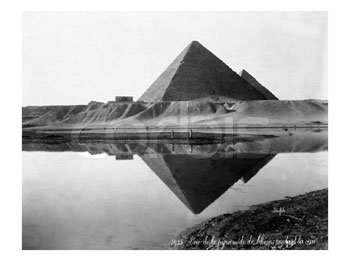
I looked upon the Nile and raised the pyramids above it.
I heard the singing of the Mississippi when Abe Lincoln went
down to New Orleans, and I've seen its muddy bosom turn
all golden in the sunset.
I've known rivers:
Ancient, dusky rivers.
My soul has grown deep like the rivers.
-- Langston Hughes
One of the rivers that Langston Hughes wrote about is the Nile river that is found in East Africa and is the longest river on earth.
The Nile River is mentioned as flowing out of the Garden of Eden in the Bible. Here are some pictures of the magnificent Nile, also know as Abay and Ghion River.


As it is evident in many of his works, on the poem bellow, Langston Hughes writes positively about Africa. Some Africans are currently translating Langston Hughes' poems to different African languages.
The Negro Speaks of Rivers
I've known rivers:
I've known rivers ancient as the world and older than the flow
of human blood in human veins.
My soul has grown deep like the rivers.
I bathed in the Euphrates when dawns were young.
I built my hut near the Congo and it lulled me to sleep.
I looked upon the Nile and raised the pyramids above it.
I heard the singing of the Mississippi when Abe Lincoln went
down to New Orleans, and I've seen its muddy bosom turn
all golden in the sunset.
I've known rivers:
Ancient, dusky rivers.
My soul has grown deep like the rivers.
-- Langston Hughes
One of the rivers that Langston Hughes wrote about is the Nile river that is found in East Africa and is the longest river on earth.
The Nile River is mentioned as flowing out of the Garden of Eden in the Bible. Here are some pictures of the magnificent Nile, also know as Abay and Ghion River.


Monday, November 27, 2006
How big is Africa?
Africa is one of the largest content in the world. Africa is larger than China, USA, and Europe combanied. The continent is also the least crowded place on earth.
The involuntary and semi voluntary migration out of Africa continue to weaken the mother land.
As one African singer reminisces:
“Since you (the African Diaspora) are gone,
it has been such an empty home.
Come on back to where you once belonged.
You are always welcome home.
Welcome home...”
To hear this lovely and empowering song tune into Kofi Dompere's African Rhythms radio show, every Sunday at 10:00pm. You can find the radio show at www.wpfw.org
We thank Alah for giving us such a beautiful, rich and enormous continent. And we ask God to give us the wisdom to enjoy our land.

Source: http://www.bu.edu/
EgziAbhear African Tebek
The involuntary and semi voluntary migration out of Africa continue to weaken the mother land.
As one African singer reminisces:
“Since you (the African Diaspora) are gone,
it has been such an empty home.
Come on back to where you once belonged.
You are always welcome home.
Welcome home...”
To hear this lovely and empowering song tune into Kofi Dompere's African Rhythms radio show, every Sunday at 10:00pm. You can find the radio show at www.wpfw.org
We thank Alah for giving us such a beautiful, rich and enormous continent. And we ask God to give us the wisdom to enjoy our land.

Source: http://www.bu.edu/
EgziAbhear African Tebek
Sunday, November 19, 2006
African Americans' Gift to the World

Menghistu Lemma's poem “Basha Ashebir in America” vividly recounts the experience of Basha Ashebir, an Ethiopian diplomat who was thrown out of a whites-only restaurants in Washington DC, in the early 1950s. After a verbal confrontation with the restaurant manager, Basha Ashebir had to resort to using his stick, to no avail. Seeing how Basha was perplexed by the ordeal, it was an African American who explained to him why the manager refused to serve him and eventually kicked him out: becuase of his skin color.
Learning from each other is not new for African Americans and Ethiopians. As far back as the 18th century, Ethiopians and African Americans have worked together. To move away from the segregated setting of the Church, they established the Abyssinian Baptist Church, which became the first African American Baptist congregation in New York and the fourth in the nation. Similarly, in 1930s Harlem, African Americans rallied around Dr. Malaku Bayen, Ethiopia’s envoy to the Black World, to help him put an end to Fascist Italy’s invasion of Ethiopia throught the Ethiopian World Federation.
Furthermore, thanks to great civil and human rights advocates such as Malcolm X, Martin Luther King and countless generations of conscious individuals who fought discrimination, African immigrants are able to take advantage of political and economic refuge in the United States. Nowadays, not only can Ethiopians eat at any restaurant, they are also the proud owners of African restaurants all over the United States.
Ethiopian artists and scholars in the Diaspora also drew their inspiration from the African American experience. Haile Gerima, who lives and works a pan-African life, learned from decades of personal encounters with African American issues and personalities. Haile, who teaches film at Howard University, has in his film Sankofa, taken us on the harrowing journey African Americans took through the middle passage and struggling through the arduous life of an African slave in an American plantation. Throught the movie Sankofa, we are re-born anew by the rediscovery, grounded in the present but connected to the past and to the spirits of our ancestors.
Skunder, which we will publish his history on this blog soon, also studied and often discussed the African American experience as it related to Africa. He voraciously consumed and learned from all African American creative productions. Through studying Black music from childhood, he incorporated what he learned from Jazz and Blues to his art. Hearing Ornette Coleman and Miles Davies create their own unique and revolutionary improvisational Jazz, Skunder similarly revolutionize African traditional art.
Continuing to work together improves the likelihood that our children will have role models, philosophers, historians, architects, scientists, artists and freedom fighters, that look like them. Then, we can start to utilize our bestowed gifts and by doing so, give back to the Black culture that nurtures us.
In this spirit, Ephraim Isaac, one of the first Africans to obtain a PhD at Harvard, and establish the African American department there, stresses the importance of mobilizing the Greater African Diaspora to celebrate the upcoming Ethiopian Millennium. The Ethiopian Calendar, which turns 2000 in less than one year, is one aspect of the rich Black heritage that goes back to the birth of humankind.
What better way to thank Dr. King and countless others for their brave vision, than to celebrate this Black Millennium and to fulfill the dreams of visionaries who had used Ethiopia as a rallying call for freedom, justice and peace. For it is one of the things that can continue to shape our shared experience, and most importantly, works to unite us.
In the words of Menghistu Lemma, the Black Diaspora should focus on what unites us: understanding that we are one people with different names.
The Amharic Version of the poem, coming soon.
Friday, October 06, 2006
Thursday, September 14, 2006
Safori’s Colorful & Soulful Art

Safori will exhibit his art at the Artful Gallery from September 22 to October 21, 2006. The opening reception will be held on Friday September 22, 2006 from 6:30 to 9:30pm.
Artful Gallery is located at 1349 Maryland Ave, NE, Washington DC 20002.
To find out about this colorful artists visit the following website:
http://www.houseofsafori.com/biography.htm
African Union Flag & Anthem

AFRICAN UNION ANTHEM
Let us all unite and celebrate together
The victories won for our liberation
Let us dedicate ourselves to rise together
To defend our liberty and unity
O Sons and Daughters of Africa
Flesh of the Sun and Flesh of the Sky
Let us make Africa the Tree of Life
Let us all unite and sing together
To uphold the bonds that frame our destiny
Let us dedicate ourselves to fight together
For lasting peace and justice on earth
O Sons and Daughters of Africa
Flesh of the Sun and Flesh of the Sky
Let us Make Africa the Tree of Life
Let us all unite and toil together
To give the best we have to Africa
The cradle of mankind and fount of culture
Our pride and hope at break of dawn
O Sons and Daughters of Africa
Flesh of the Sun and Flesh of the Sky
Let us make Africa the Tree of Life
Subscribe to:
Posts (Atom)