Tuesday, February 12, 2008

Behailu Zerihun: Explorer

Behailu Zerihun traveled all over Africa on a journey to explore kinship. Enjoy Behailu’s pictures thought the mother land.

Behailu has been volunteering at the Marima Tutoring and Mentoring Program (MTMP) in Washington DC for several years.

Mariam Tutoring and Mentoring Program (MTMP) was founded in 2002 to operate and develop educational and recreational programs for elementary and high school students. The program has near a 100 percent high school graduation and collage bound rate. The program originally started as an outreach program of the Debre Selam Kidest Mariam tutoring entity. The program has helped over 260 students improve their academic future while encouraging a sense of service toward others.

MTMP meets every Saturday throughout the school year to offer elementary and high school students to help in Math, Physics, English, Chemistry, Amharic as well as mentoring them to build their confidence and community involvements. MTMP also have a confidence building programs such as public speaking and writing exercises.
MTMP also organizes filed trips, which are entertaining and educational for MTMP students, to parks, universities, planetariums and to museums.


selamawit nega

Selamawit Nega is a talented vocalist. She lives in Washington DC. She is currently working on her latest and much anticipated CD. Here is Selamawit Nega's latest music video about the Ethiopian millennium. On this single CD release, she says let it be peace, unity and love. This is one of the best millennium songs. Be on the look out for her latest CD and CD release parties near you. Enjoy Music arrangement and keyboard by Daneal WoldGebreal. Lead guitar by Peter Charley. Bass guitar Fasel Woheb. Lyrics by Selmawit Nega and Selamawit Legesse. Melody by Selamawit Nega.

Sunday, February 03, 2008

"The Beautiful Things That Heaven Bears"


By Elsa Gebeyehu

Dinaw Mengestu is the author of The Beautiful Things That Heaven Bears, a Los Angeles Times bestseller and Seattle Reads pick of 2008, as well as the forthcoming novel How To Read the Air. He was born in Addis Ababa, Ethiopia, in 1978. In 1980, he immigrated to the United States with his mother and sister, joining his father, who had fled Ethiopia during the Red Terror.

He is a graduate of Georgetown University and Columbia University’s MFA program in fiction and the recipient of a 2006 fellowship in fiction from the New York Foundation for the Arts and a 5 Under 35 Award from the National Book Foundation in 2007. He has written for Rolling Stone and Harper's, among other publications. He lives in New York City.

Photo: Jen Snow

Monday, January 21, 2008

Sossina Haile: Scientist and Environmentalist


Scientist Sossina used her knowledge to create energy at lower cost to human and earth. She created the world's first solid-acid fuel cell, which is a clean technology that converts chemical energy to electricity for powering cars, buses and power plants.

The fuel cell that scientist Sossina made emits only pure water. What makes scientist Sossina’s discovery extra special is that her fuel cell makes it possible to produce energy at comparatively low temperatures.

Scientist Sossina is a mother of two. She studied at the Massachusetts Institute of Technology.

According to Newsweek, Scientist Sossina says "there's nothing better than being able to combine an intellectually exciting topic with the knowledge that will be beneficial. To me, that's just glory."

Thursday, January 10, 2008

Selamawit Nega: Powerful Musician


By Dr. Tedla W. Giorgis

Selamawit Nega, SelamKen, is a young renowned Ethiopian musician who has performed around the world. With fifteen years of experience in musical composition and performance, she is very much sought after by the Ethiopian communities and organizers of World music festivals.

In addition to her acclaimed performances across the Ethiopian communities both in the US and Europe, Selamawit has performed at places like the Smithsonian Institute in Washington, D.C., the World Music Institute of Washington, D.C., Dance Africa in Chicago, Dance Africa in New York, the World Music Institute of New York, Harvard University and Tufts University.

Selamawit is versatile performer and musical repertoire includes selections from the various parts of Ethiopia, including Amarigna, Guragigna, Ormigna, Tigrigna, and Welaytagna. She has also performing across the US, Europe and in Africa. Selamawit and her band are currently residing in Washington, D.C.

If there is one Olympics event that made Ethiopia famous it is the marathon. Selamawit has made a great contribution toward making the victorious Ethiopian marathon runners well known through out the world by composing and dedicating her album title “Mefeter Andenew.” Her CD and cassette was enthusiastically received both by critiques and members of the Ethiopian community.

****
Be on the look out for Selamawit’s latest and much anticipated CD. It should be released in early 2008. Her latest CD encompasses her powerful and majestic voice with variety of music from all round the world.


To contact Selamawit Nega call (202) 549-7818.
http://www.myspace.com/selamawitnega

Friday, December 14, 2007

Selam Global Enterprises


Welcome to Selam* Global Enterprise (SGE)!!!

SGE is a business and trade consulting firm. Our experts provide profitable and efficient strategic plans through our consulting, writing, and editing services. We serve individuals, governments, corporations, businesses, and entrepreneurs.

SGE is positioned to promote ideas, art works, products, and businesses in the United States and Africa. We have a team of experts ready to assist you in promoting your existing products, services, and enterprises as well as support you in starting up a new business.

SEG supports individuals in becoming successful entrepreneurs. We also offer information to government officials and private business owners about national and international economies, business and trade practices. We have experts in quantitative and qualitative analysis, economic studies, general operations, research and development, cost-benefit analysis, economic planning, international trade and econometrics.

SGE assists clients in creating and expanding businesses. For instance, if you are interested in establishing a new business or in selling your products in the Washington, D.C. metropolitan area, our experts will help you institute a sound and profitable business plan. We will also provide you with efficient distribution and marketing strategies. We help entrepreneurs to access the African and American markets and visa versa. Our goal is to assist our clients in developing strategies that will result in win-win situations through business and trade partnerships.

*Selam is derived from an ancient African language, Geez. It means peace.

SGE
P.O.Box 73413
Washington, DC 20056

(202) 299-4958

Dinaw Mengestu


Dinaw Mengestu won 2007's Guardian First Book Award, for his book “Children of the Revolution.” The Guardian First Book Award is worth £10,000.

Congratulation Dinaw Mengestu.

Ike Turner: River Deep Mountain High

The legendary musician, Ike Turner, passed away at the age of 76. May he rest in peace. One of his greatest works is a song titled “River Deep Mountain High,” which was Performed by Tina Turner who is known for her majestic voice.

Enjoy Ike and Tina’s work. Read the lyrics and decide how you feel about the song.


When I was a little girl I had a rag doll
The only doll I’ve ever owned
Now I love you just the way
I loved that rag doll
But only now my love has grown
And it gets stronger in every way
And it gets deeper let me say
And it gets higher day by day
Do I love you my oh my
River deep, mountain high
If I lost you would I cry
Oh how I love you baby, baby, baby, baby

When you were a young boy did you have a puppy
That always followed you around
Well Im gonna be as faithful as that puppy
No Ill never let you down

Cause it goes on and on like a river flows
And it gets bigger baby and heaven knows
And it gets sweeter baby as it grows
Do I love you my oh myRiver deep, mountain high
If I lost you would I cry
Oh how I love you baby, baby, baby, baby

I love you baby like a flower loves the spring
And I love you baby like a robin loves to sing
And I love you baby like a schoolboy loves his bag
And I love you baby river deep mountain high

Lyrics source: www.lyricsfreak.com


Monday, December 03, 2007

Fire in the house

by: Edna Ravenel

Who will prove to be man or mouse;
especially when there isfire in the house
No time to run, no time to hide,
this is the time to seewho's the real genius;
with the right decisionIt is no longer a time of convince,
it a time ofdecision,
only the right one will count
Ants have shown civilized man for years,
the key to
working together
Let us note
that the turmoil of man
has resulted in thisnew world's disaster
The one's that claim to lead are mere imposters;
leadingthe whole world down a road of destruction
There's still time to turn things around,
when we takeourselves out of the way;
to allow the creator to show usearthlings the right way;
in order not to furthergo astrayDon't give up because
today is a brand new day;
with lotsof hope in every way.

Tuesday, November 27, 2007

The Tale of Two Nations 5


The Tale of Two Nations 5

Ethiopian and African-American Relations: A Brief Timeline
by Andrew Laurence

Harlem Renaissance

Dr. Alain Locke, the first African-American Rhodes Scholar, architect of the New Negro Movement and Howard University professor, encourages African-American artists to recognize and incorporate their African heritage within their work.

Paul Laurence Dunbar writes his poem “Ode to Ethiopia,” James Wells paints “Ethiopia at the Bar of Justice,” Meta Fuller sculpts “Ethiopia Awakening,” and Langston Hughes, called the poet laureate of Harlem, writes in Opportunity magazine “Broadcast to Ethiopia.” These are just some of the better known examples of African American artists inspired by Ethiopia.

The Tale of Two Nations 4


Ethiopian and African-American Relations: A Brief Timeline
by Andrew Laurence

1903 - 04

Henry Ellis, an African-American Wall Street broker, with assistance from Haitian Benito Sylvain, helps make possible the signature of a Treaty of Amity (Friendship) and Commerce between Emperor Menelik II of Ethiopia and Robert P. Skinner for the United States. He personally congratulated Emperor Menelik on the Adwa victory which he saw, rightly, as a victory over colonialism.


The Treaty is duly proclaimed by U.S. President Theodore Roosevelt. Dr. Joseph Vitalien of Guadeloupe becomes Emperor Menelik’s personal physician at this time.

Thursday, November 22, 2007

Bright Star: Teddy Afro


By Nesanet Hailu

Teddy Afro is courageous and visionary lyricist of the new millennium. He is so fantastic, when ever people think his talent has reached the maximum, he sets yet another standard of musical performances on and off the stage.

Here are some of the standards that Teddy set

Productivity Standard:
Teddy is like a music machine. He produces new products at least every three months: singles and music videos have been continuously coming to DC and the surrounding area. We consider him a good role model because he is productive artists. He is a good reminder that art could also be profitable, if people are focused and work hard.

Courageousness Standard:
Teddy has daring lyrics. He wishes Chicago, Addis Ababa, Asmara, and the rest of Africa a happy new year. You might ask what makes that so audacious. The answer is throughout the Diaspora and inside the country; he seems to be the only one who still mention Eritrea in their songs. Most other’s wishes of New Year stop at the new and fake boarder. But Teddy Afro, seems to understand there are no boarder inside an African blood. He is generous to wish the whole Africa including Asmera to have a happy New Year.

Pan-African Standard:
Teddy does not only preach Pan-Africanisim, but like Haile Girima, he seems to show it in his artistic work. People recognize the increasingly high influence of Bob Marily’s music and spirit on Teddy Afro.

Unlike some Ethiopian artists, such as Zeritu, whose role models are talent less American boy groups, Teddy Afro seems to choice creative and original artists from people that are closer to him and artists who love his people. For us who live in the Diaspora, we feel proud to introduce Ethiopian music to our American friends through Teddy Afro’s songs. He doesn’t have a scratchy voice, like Aster’s.

Sharing Standards:
For decades Ethiopian musical seen consisted of a sorry sounding keyboard and a single vocalist. When bands had become the thing of the past, Teddy started working with great band called Abogeda.

To everyone’s pleasant surprise he also added two beautiful African American female vocalists to his band on his last U.S. tour. He also added the Setegn Atenaw, a talented masinko player, to his band. His latest video, of the American tour, is an absolute improvement from his cheap BET imitation looking music videos.

Lyrical Sophistication Standard:
He works with timely themes yet ancient words. In the time were the precious Geez is being the kicked out of the church and Ethiopia and being transferred into large libraries and universities around the western world, Teddy seems to be kind to Geez. Teddy reminds us that Geez is something beautiful and valuable – something we should learn and use.

Unlike many Ethiopian lyrics that tend to focus on negativity, Teddy has several positive and uplifting lyrics. Most Ethiopian musicians think that a song must have sad lyrics to attract people’s attention, which is untrue. People listen to music to feel better, to get some energy and relax. Teddy also has grim lyrics, such as Eyesaku Eskista meaning crying when you’re dancing.

However, he balances his negative with lyrics that promote unity such as Jah Yasteserial. Most other lyrics concentrate on female and male negative relationships, but his lyrics tend to be more universal discussing about family relationship, history, and more.


http://www.npr.org/templates/story/story.php?storyId=10819101

Wednesday, November 07, 2007

Inventor Shifferaw


Mr. Shifferaw is one of the current Ethiopian investors who lives in the Diaspora. One of his inventions, the Bowflex, is used for efficient exercise thought the world.

“More than 20 years ago, Dosho Shifferaw was trying to make ends meet by driving cabs and working at hotels – while he was hatching plans for an exercise chair that he was convinced would be a success,” explains Therese Iknoian.

“The 1974 revolution that overthrew Emperor Haile Selasie, stranded this young Ethiopian in California, where he was studying industrial design and engineering. He proved that he understood two American passions when he invented the Bowflex exercise machine and made a wile success on it by hawking it on TV,” According to The Washington Post on Sunday June 12, 2005.

To find out Mr. Shifferaw’s other inventions, visit www.doshodesign.com

Thursday, October 18, 2007

Al Gore


Al Gore and the U.N.'s Intergovernmental Panel on Climate Change won the 2007 Nobel Peace Prize on October 12, 2007. The former vice president, Al Gore, was recognized for his work on increasing awareness about environmental degradation.

As Rachel Carson did with her book, “Silent Spring,” Al Gore has been warning that global warming is "the greatest challenge we've ever faced” through his book and movie “An Inconvenient Truth."

Wednesday, October 17, 2007

The first millennium song


Two Washington, DC musicians -- Poppa Smith and Charlie Mack – went to Ethiopia to perform in one of the top entertainment center in Addis Ababa: Sheraton Hotel.

Poppa Smith and Charlie Mack followed Duck Ellington footsteps to go from the Chocolate City to the New Flower (Addis Ababa).

Tewodros Mekonen (Teddy Mak) collaborated with Poppa Smith and Charlie Mack to prepare Ethiopia for the millennium. Their wishes, as seen on this video, are pleasant: to provide musical instruments and agricultural equipments to Ethiopia. The director is Tikher Tefera. Enjoy the video.

Tuesday, October 16, 2007

Conflict Resolution in Action


Haile Gebrselassie


Left: Professor Haile Gerima - Right: Dr. Ephraim Isaac. Picture by Markos Taddesse

Thanks to Dr. Ephraim Isaac and his peace making team, more than 37 individuals are free from prisoners in Ethiopia. The peace making team includes Haile Gebrselassie who has set the world Marathon Record.

Dr. Ephraim Isaac has been attempting to promote peace in Ethiopia and around the world. According to Ed Koch, Isaac made several 20-hour plane trips from his home in New Jersey to Ethiopia to assist the political prisoners. He also has been supporting Ethiopian students for the last few decades.

Dr. Isaac is a peacemaker, visionary and teacher. He was the first professor of Afro-American Studies department at Harvard University. He directed the Institute of Semitic studies in Princeton.

He received a Peacemaker Award from the Tanenbaum Center in 2002 for his effort to resolve the boarder conflict between Ethiopia and Eritrea. In July 2004, Dr. Isaac also received an honorary Doctor degree from Addis Ababa University.

Currently, Dr. Ephraim Isaac directs the Institute of Semitic Languages, Inc., in Princeton, New Jersey. He has taught and published widely in the areas of African languages, ancient religions and black civilizations, Ethiopian history, and the concept and history of slavery.

Monday, October 01, 2007

Ethiopian Millennium Song

Chachi and Isaac Haile Selassie, outstanding musicians, collaborated on the Ethiopian Millennium to express their positive wishes to Ethiopia, Africa and to the rest of the world.

Chachi is the first Ethiopian rapper. She also has been very active in promoting African Unity for decades. Chachi has been raising many orphans in Ethiopia.

Isaac is also an active pan-Africanist. He is an Ethiopian singer who was raised by King Haile Selassie. Isaac has been teaching the Amharic language to Jamaicans for many years in the United States.

Thursday, September 27, 2007

Billie Holiday


Southern trees bear strange fruit,
Blood on the leaves and blood at the root,
Black bodies swinging in the southern breeze,
Strange fruit hanging from the poplar trees.

Pastoral scene of the gallant south,
The bulging eyes and the twisted mouth,
Scent of magnolias, sweet and fresh,
Then the sudden smell of burning flesh.

Here is fruit for the crows to pluck,
For the rain to gather, for the wind to suck,
For the sun to rot, for the trees to drop,
Here is a strange and bitter crop.

Friday, September 21, 2007

Prince Ermias Sahle-Selassie


Picture by Andrew Laurence

From Afro American Newspaper

His Imperial Highness Prince Ermias Sahle-Selassie, the grandson of the late Emperor Haile Selassie I of Ethiopia came to Washington, D.C., recently not only to help celebrate the Ethiopian-African second millennium but also to reinforce ties between Africans and African Americans.

INQUTATASH-Meskerem 1/2000 is the beginning of the third millennium based on the Ethiopian Orthodox Tewahedo calendar that lags the Julian and Gregorian calendars by seven years.

On Sept. 12, one day after the Ethiopian New Year, the prince placed a wreath of green, yellow and red flowers at the African American Civil War Memorial, surrounded by a group of Ethiopian religious and military officials, and other leaders in the Ethiopian, African-American and Ethiopian World Federation community.
The congregation then proceeded to the New Bethel Baptist Church for a ceremony featuring speakers and displays.

Tamrat Medhin, president of the Ethiopian-African 2nd Millennium Council (EA2MC) formally opened the Millennium Ceremony and the honorable Councilman Jim Graham of Ward 1, which has the largest concentration of Ethiopian immigrants, presented a Ceremonial Resolution from the Council of the District of Columbia declaring Sept.12, 2007, as the "Ethiopian Millennium Recognition Day."

"It is the right day, on the dawn of the new millennium, to recognize the struggles and triumphs so many have endured for all of us, as a community of all colors, to have the opportunity to remember and celebrate this connection."
H.I.H. Prince Ermias spoke eloquently about the debt Ethiopians owe to the African-American community for their support during Mussolini's fascist invasion of Ethiopia, and their struggle for civil rights enabling the Ethiopian Diasporas to participate in the American society with dignity. H.I.H. Prince Ermias made an impassioned speech invoking the historical ties between Africans in the Diaspora, and a commitment to make the future more peaceful and prosperous for Africa and the world.

Mr. Chris Haley, the director of Slavery at the Maryland State archives who was made famous by his uncle Alex Haley's book {ROOTS,} spoke about his ancestor who arrived in September 1767 as an enslaved teenager and descendent of Kunta Kinte/Gambia. He added that one could draw a line straight across from Gambia to Ethiopia that connects all Africans together on that map. He saluted the Ethiopians who claim to be from the " Cradle of Civilization" and the birthplace of Lucy "Dinkinesh" ("Thou art wonderful"), the oldest known humanoid fossil.

"I come to you in amazement that I, a Black man born in Washington, D.C., who can trace his roots back to the Gambia, am able to stand in the presence of a descendent from the line of King Solomon, the Queen of Sheba and their child, the first Ethiopian King Menelik; amazed that I can stand before their heir, the grandson of H.I.H. Haile Selassie I," Haley said. "And as his placing of a wreath at the African American Civil War memorial commemorates and links the struggles of African descents who fought against oppression in the 1800s with Ethiopian warriors who fought against European forces in the 1900s and never gave in to colonization, I come to you, citizens of the United States and Ethiopia, in admiration.

"It is the right day, on the dawn of the new millennium, to recognize the struggles and triumphs so many have endured for all of us, as a community of all colors, to have the opportunity to remember and celebrate this connection."
Ms. Nebiat Solomon, director of the Office of African Affairs in the Office of the Mayor brought the elephant tusks residing at City Hall that Emperor Selassie donated to Washington during his visit in 1954 for display at the church.

Mr. Andrew Laurence, president of the Ethiopian-American Cultural Center displayed photos of African-American pilots Herbert Julian, aka "The Black Eagle," and Col. John Robinson who both commanded Ethiopian Air Forces against the Italians; Dr. Melaku Bayen, the first Ethiopian medical school graduate in the US, who founded the Ethiopian Research Council with diplomat Dr. Ralphe Bunche and historian Dr. William Leo Hansberry at Howard University; H.I.M. Haile Selassie presenting an Ethiopian Cross to pastor and U.S. Rep. Adam Clayton Powell Jr. at the Abyssinian Baptist Church in Harlem; and jazz great Duke Ellington performing in Ethiopia.

More activities are being planned to provide opportunities to strengthen the relationship between the Ethiopian and African-American communities in Washington, D.C., for the future including a religious pilgrimage to Ethiopia, cultural education programs, and grassroots actions on various local issues.

Sunday, September 16, 2007

Celebration


Picture by Andrew Laurence

Picture by Andrew Laurence

Africans celebrated the African millennium near the Washington monument on September 11, 2007.

The organizers were Anteneh Demelash, Elias Fullmore, and Seaty Yoseph. Approximately 20,000 people came to celebrate the millennium.

Burntface, African Heritage, and The Pocket entertained the crowd. Food was provided by Zed’s Ethiopian Restaurant, Café Nema Somali restaurant,and Etete Ethiopian Cuisine. The program started at 5:00pm and ended midnight.

The organizers say they are already working on preparing the next year's new year event.

Wednesday, September 12, 2007

Happy African Millennium

AU Declaration on the Ethiopian Millennium

The following Declaration on the Ethiopian Millennium was made by the Heads of State and Government of the African Union at the Summit in January 2007.

AU Declaration on the Ethiopian Millennium

We, the Heads of State and Government of the Member States of the African Union, meeting during the Eighth Ordinary Session of our Assembly held in Addis Ababa, the Federal Democratic Republic of Ethiopia, from 29th – 30th January 2007;

Taking note of the briefing by the Ethiopian Government on the Ethiopian Millennium to be celebrated on 12 September 2007;

Recognising with appreciation the call of the Ethiopian people to all fellow African brothers and sisters to embrace the Millennium as a truly African occasion and to join them in the celebrations;

Noting with satisfaction the commitment of the Ethiopian people to use this occasion as a unique opportunity to highlight their collective resolve to make a difference in their struggle against poverty, and to broaden the frontiers of democracy and good governance;

Welcoming the cooperation already initiated between the African Union Commission and the Ethiopian Millennium Festival National Council;

Call upon all Member States of the African Union, the Commission of the African Union and the Regional Economic Communities to extend their support towards the successful celebration of this unique African occasion – the Ethiopian Millennium.

ENDS

Monday, September 10, 2007

Tuesday, August 21, 2007

The Tale of Two Nations 3


Ethiopian and African-American Relations:
A Brief Timeline

by Andrew Laurence

1896

Ethiopia emerges as one of the fiercely independent nations in Africa, especially after its victory over the Italians in the Battle of
Adwa.

African-Americans increasing look towards Ethiopia and it’s Emperor Menelik II, as a bastion of independence in a continent colonized by European powers.

When the Italians under Mussolini again invade the country 40 years later, Africans worldwide support H.I.M. Haile Selassie’s efforts to regain freedom for Ethiopia, and celebrate on May 5, 1941, when the Emperor returns in triumph to Addis Ababa.

Wednesday, August 01, 2007

Ethiopian Millennium Day

September 12 is “Ethiopian Millennium Day” in DC thanks to Mayor Fenty.


The Mayor of the District of Columbia, Adrian M. Fenty, Proclaimed September 12, 2007 as “Ethiopian Millennium Day” in Washington, DC.

Additionally, Mayor Fenty called upon the residents of Washington, DC to join him in recognizing the multiculturalism and diversity of the Ethiopian community.

For more information about the Ethiopian Millennium see:

www.ethiopianmillennium.com

http://www.ethiopian2000.com/

http://www.addismillennium.com/anancientland_monasteries.htm

http://www.ethiopic.com/Ethiopian_Millennium_Pages.htm

Wednesday, July 25, 2007

Movie: Black to Our Roots in Sankofa

Black to Our Roots is the inspirational story of group of teenagers’ journey from the inner-city of Atlanta to Ghana, West Africa in search of their ancestral home.

Beginning in Atlanta, the youth work with HABESHA, a community based organization, to raise their own travel costs through fundraising and community service projects in which they learn about their cultural history in preparation for their ultimate journey to Africa.

Sankofa Video Books & Café
2714 Georgia Ave. NW
Washington, DC 20001

August 4, 2007
3PM - 8PM
$10

http://sankofastore.com

Friday, July 20, 2007

A Tale of Two Nations 2

Ethiopian and African-American Relations:
A Brief Timeline

by Andrew Laurence


1808

African-Americans along with a group of Ethiopian merchants are unwilling to accept racially segregated seating at the First Baptist Church of New York and withdraw their membership.

Determined that they would organize their own church, they establish the Abyssinian Baptist Church, now located in Harlem, New York. The name is inspired by the nation from which the merchants of Ethiopia had come, Abyssinia.

As the first non-segregated Baptist Church in America, it is led for many years by the great Pastor and US Congressman Adam Clayton Powell Jr. after his father Adam Clayton Powell Sr., and would serve as a focal point in New York for many of the Pan-African and civil rights movements to come.

Tuesday, July 17, 2007

Party with a purpose Atlanta with Abezash

Party with a purpose is an event to raise funds for the Artists for Charity Children's home in Ethiopia. The AFC home is an orphanage for HIV+ orphans in Addis Ababa, Ethiopia.

If your in the Atlanta area please join us on Wednesday the 18th of July at Django. If you can't make it to the event and would like to make a donation please visit the site below.

http://artistsforcharity.org
http://www.artistsforcharity.org/afcchildrenshome/

Monday, July 16, 2007

A Tale of Two Nations 1

Ethiopian and African-American Relations:
A Brief Timeline

by Andrew Laurence


18th - 20th Century A.D. - Numerous references to Ethiopia in the Bible, such as (Psalm 68:31) “…Ethiopia shall stretch forth her hands unto God,” provides refuge and salvation for Negro slaves in America.

During the American Revolutionary War, one African-American regiment proudly wears the appellation of “Allen’s Ethiopians,” named after Bishop Richard Allen, founder of the African Methodist Church in Philadelphia.

Robert Alexander Young, a slave preacher, publishes The Ethiopian Manifesto. Phyllis Wheatley, the poet-laureate of colonial America, also makes use of this discourse as did Prince Hall, a Revolutionary War veteran and founder of the African Masonic Lodge.

Drusilla Dunjee Houston, researcher and historian, writes the amazing book, Wonderful Ethiopians of the Ancient Cushite Empire. Frederic Douglas Jr. orates eloquently on the Negro problem alluding inspirationally to Ethiopia.

The decisive victory over Italy at Adwa cements Ethiopia’s independence from European colonialism and has a profound impact on the quest for dignity and respect for Africans throughout the world.

Ethiopian inspired Pan-African movements give hope to those seeking justice in the eyes of God and the world. Martin Delaney, Carter G. Woodson, John Jackson, Willis Huggins, Joseph Harris, and Edward Blyden are prolific scholars who write brilliantly on Ethiopia’s origin and history.

Thinkers and scholars from William E. B. Dubois, editor of the influential Crisis Magazine, Sylvester Williams, C.L.R. James, Chancellor Williams, Walter Rodney, George Padmore, John Henri Clarke and Aime Cesaire build on these traditions of Pan-Africanism and Ethiopianism.

They point the way for future African leaders such as Kwame Nkrumah, Patrice Lumumba, Haile Selassie, Sekou Toure, Leopold Senghor, Jomo Kenyatta, Julius Nyerere, Robert Mugabe, Nelson Mandela; and African-American activists Mary Mcleod Bethune, Paul Robeson, Rev. Dr. Martin Luther King Jr., Malcolm X, Harry Belafonte, Stokely Carmichael (Kwame Ture); and political leaders Congresswomen Maxine Waters, Sheila Jackson Lee, Barbara Lee, Congressmen Adam Clayton Powell Jr., Donald Payne, Ron Dellums, Gregory Meeks and John Conyers, Ambassador Andrew Young, Melvin Foote of Constituency for Africa, Randall Robinson, Danny Glover and Bill Fletcher Jr. of TransAfrica Forum, to name just a few.

Picture: Pastor and US Congressman Adam Clayton Powell Jr. Accepts the Ethiopian Lalibela Cross from Emperor Haile Selassie at the Abyssinian Baptist Church in Harlem, New York – 1954.


To be continued…..

Wednesday, July 04, 2007

Ethiopia’s Exports


Leading Export Sectors:

• Agriculture, forestry, fisheries, and agro-processing, including coffee and oilseeds.

Sectors with Greatest Export Growth Potential:

• Agriculture, fisheries, and agro-processing, including coffee, medicine, tea, honey, leather products, and horticultural products
• Energy-related, including hydropower and geothermal energy
• Manufacturing, including textiles and apparel, art, leather goods, and jewelry
• Services, including tourism, education, medicine, air transportation, and publishing

Monday, June 25, 2007

Africa’s Generosity


In 2006, Africa’s total export to the United States was worth approximately $79 billion, which increased by 22.4 percent since the previous year. The top seven African exports were oil, precious metals, organic chemicals, clothing accessories (not knitted), iron and steel, apparel and clothing, and cocoa.

The above information was found from the U.S. government trade database and it does not include the unrecorded exports.

Africa has been exporting mostly raw materials that have been building other continents for centuries. Raw materials do not have high monetary value in the international market. Raw materials – such as diamond, gold, petroleum, natural gas, iron, steel, copper, cobalt, uranium, lead, potash, forest, and coltan – have been flooding out of Africa. Eighty percent of the world’s known reserves of coltan is found in Africa. Coltan is used as a “vital components in electronic devices, ranging widely from mobile phones to laptop computers,” according to wikipedia.org.

Even during ancient times, Africa has always been generous to the world. Some of her incredible and precious offerings included and it still includes, people, music, knowledge, mathematics, arts and more.

The African Diaspora with Africa has now the capacity to add value on Africa’s export in a way it could help all: through creating trade links with each other. Economist Dr. Laurie-Ann Agama suggests Africa also increases the internal trade by creating manufacturing links amongst countries in the continent. Intercontinental trade is almost non existing in Africa. Africa and the African Diaspora also should invest to increase values of the raw materials. Check back to find out ways to be involved in the profitable international trade.

Saturday, May 19, 2007

Monday, April 16, 2007

The African Millennium: Our Time


The African Millennium will start on September 11, 2007.

According to our calendar, it is time to awaken and guide our own destiny. Dr. Ephraim Isaac repeats the Prophet Isaiah’s 3,000 years old message, below, to encourage Africans to rule their fate through declaring economic independence.

“Awake! Awake! Put on your strength! Put on your new beautiful garments. Shake yourself from the dust: arise. Loose your bone from your neck....”

Dr. Isaac stressed the importance of mobilizing the African Diaspora to celebrate the Ethiopian millennium as a way to revive the African Renaissance, which is a network of people devoted to sublimate the consciousness and living standards of Africans world wide.

Purchasing African products, such us the traditional clothing and jewelry, is important in asserting economic independence.

Dr. Isaac is a peacemaker, visionary and teacher. He is the first professor of Afro-American Studies department at the Harvard University. So lets us follow his example and wear African garments.

Sunday, March 18, 2007

“Best kept secret in today's world economy"


Take out all the negative information about your continent from your mind. Allow me to share positive information about our Africa.

Africa is one of the second largest continents in the world. Africa is larger than China, USA, and Europe combined. The continent is also the least crowded place on earth.

Africa is the richest in human and natural sources. There are so many African workers and intellectuals who built Africa and other continents. United States of America was built by Africans. As soon as the door to the Noble Prize started opening for Africans in the 1950s, after colonialism and slavery, Africans were able to demonstrate to the world their excellence in sciences, arts and peace making.

Other natural resources in Africa include ancient books, medicine, diamond, gold, petroleum, natural gas, copper, medicines, cobalt, uranium, lead, potash, forest, coltan and many more others minerals. Eighty percent of the world’s known reserves of coltan are found in Africa. Coltan in used as a “vital components in electronic devices, ranging widely from mobile phones to laptop computers,” according to wikipedia.org.

Mostly non Africans are currently making most money for their investment in Africa. According to the UN Secretary-General Kofi Annan, "Africa's profitability is one of the best kept secrets in today's world economy."

Now it is our time to make a profit from our continent. Let’s invest our time, money, and knowledge in our continent. Even if we cannot trade, open factories, educate people, or move to Africa now, we can start thinking positively about Africa prosperity and unity. Globalization forces us to become broad minded. Division limits our growth. Our culture also directs us to choose unity.


Picture source: http://www.etiopiamagica.it/fiori1.htm

Monday, February 26, 2007

African Film Festival - 8


Danny Glover participated on the Eighth African Film Festival, which took place in Boston from Febraury 16 to Febrauary 25, 2007.

According to MFA, Mr. Glover through his company, Louverture, produced Abderrahmane Sissako's latest film, "Bamako." Mr. Glover also acted in the film. Mr. Glover decided to work with Sissako on "Bamako" because "It attempts to present the reality of what is happening to people, while at the same time clarifying the macroeconomic context that creates that reality," he said.

Mr. Glover’s company, Louverture, is dedicated to the development and production of films of historical relevance, social purpose, commercial value, and artistic integrity.

Mr. Glover is also a dedicated Pan-Africanist. His presence in many African related events and in Africa is appreciated by many Africans.

He is also the current chairperson of TransAfrica Forum, which is an organization that serves as a major research, educational, and organizing institution for the African-American community offering constructive analyses of issues concerning U.S. policy as it affects Africa and the Diaspora in the Caribbean and Latin America.

Monday, January 15, 2007

Ethiopian Returnees Give Hope


By Eliab Tarkghen

Semira is 13 years old and aspires to be a writer. She writes poems, stories and dramas. In fact she is working on a book. Her book will be about the struggle and battle of living with HIV and also sort of How-To-Guide. You see Semira is writing from experience. She is a living proof that one can lead a normal life even after being infected with HIV. Semira's story is not unique among the 13 other kids who live with her in a family style run charity by Artists For Charity (AFC). Started by Abezash, with her fellow artists Suilman and Mekeda, all returnees from the U.S, the charity feels more like a close-knit family than an orphanage. Indeed the word Orphanage feels cold, distant and heartless, and Abezash herself detest the usage of it.

All the kids came to the AFC family after loosing both their parents to the AIDS epidemic. Neglected by relatives and left to fend for themselves, some of the kids would have died if it was not for AFC. At AFC one can easily see the care that is provided to these kids. Medicine, proper nutrition and a full time Nurse is a priority. In fact when the kids arrive to AFC, most are underweight, some have low white blood cell count (WBC), and some have open soars on their body. With tender care and proper nutrition AFC helps these kids recuperate quickly. The average weight gain of AFC kid is 7 kg, and in cases like Semira it is more than weight gain, it is regaining a fighting chance. Semiria has gained 6 kg, and her WBC that was in the low teens now stands at 200. It is still far from being a normal WBC, but it is a start.

One of the many amazing things about AFC is the founders' passion and commitment. Abezash, Sulliman and Mekeda, not only run the organization, but they live with the kids. They have given up their lives in the U.S to nurture, help, and raise these bright kids. In fact the kids call them Mommy and Daddy, a testament to their closeness with the kids. Everything is about honesty, and support. It
is about knowing the true nature of the disease HIV/AIDS, as well as learning to cope with the disease. The kids will be the first one to tell you they have HIV. They know the stigma; but in their own eloquent way they make you understand, it is just another disease.

Currently, 800,000 children have been orphaned by AIDS in Ethiopia. In fact the prediction is gloomy, it is expected by the year 2014, this figure will increase exponentially to 2.5 million. It takes more than
Abezash, Suliman and Mekeda to tackle this grave threat to our nation. But they have started the hard battle for us, it is now in our hands to extend the fight and lessen the suffering of those who are
unfortunate enough to be the victim of HIV/AIDS and its aftermath.

I know Semira will finish her book. I also know one day we will see this bright writer authoring a mouth-dropping novel that may end up being a best seller. Thanks to AFC it is not a dream, but a reality in
the making.

Visit AFC website
http://www.artistsforcharity.org/
http://www.eliabconsulting.com/abezash_kids/index.html


Peace


Thursday, December 28, 2006

Pan-African Colors


The ancient Ethiopian/African flag has a lion on it. The lion represents Jesus Christ, according to the Ethiopian Orthodox Towahdo Church. Many African and South American flags’ are inspired by the above Ethiopian flag. The colors, green, yellow, and red became known as the Pan-African colors, because Ethiopia was able to defeat colonialism.

Countries that have the Pan-African colors on their flags include Angola, Benin, Burkina Faso, Cameroon, Central African Republic, Chad, Congo, Ghana, Guinea, Guyana, Guinea Bissau, Mali, Mozambique, Rwanda, Senegal, São Tomé and Príncipe, Togo, Zambia, and Zimbabwe. The following Flag is one example from Zimbabwe.


The inclusion of the Pan-African colors in many countries’ flag is one of the testaments to the unbreakable bondage that still exist amongst Africans internationally. What do you feel about the Pan-African collors?

Peace on Africa.

Friday, December 01, 2006

Ethiopia Loves Langston Hughes

The Love is mutual!


As it is evident in many of his works, on the poem bellow, Langston Hughes writes positively about Africa. Some Africans are currently translating Langston Hughes' poems to different African languages.


The Negro Speaks of Rivers

I've known rivers:
I've known rivers ancient as the world and older than the flow
of human blood in human veins.

My soul has grown deep like the rivers.

I bathed in the Euphrates when dawns were young.
I built my hut near the Congo and it lulled me to sleep.

I looked upon the Nile and raised the pyramids above it.
I heard the singing of the Mississippi when Abe Lincoln went
down to New Orleans, and I've seen its muddy bosom turn
all golden in the sunset.

I've known rivers:
Ancient, dusky rivers.

My soul has grown deep like the rivers.


-- Langston Hughes

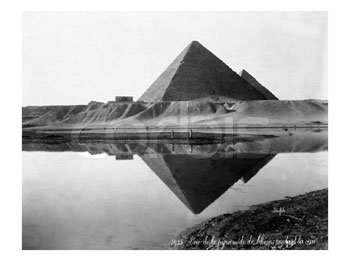
One of the rivers that Langston Hughes wrote about is the Nile river that is found in East Africa and is the longest river on earth.

The Nile River is mentioned as flowing out of the Garden of Eden in the Bible. Here are some pictures of the magnificent Nile, also know as Abay and Ghion River.


Monday, November 27, 2006

How big is Africa?

Africa is one of the largest content in the world. Africa is larger than China, USA, and Europe combanied. The continent is also the least crowded place on earth.

The involuntary and semi voluntary migration out of Africa continue to weaken the mother land.

As one African singer reminisces:

“Since you (the African Diaspora) are gone,
it has been such an empty home.
Come on back to where you once belonged.
You are always welcome home.
Welcome home...”

To hear this lovely and empowering song tune into Kofi Dompere's African Rhythms radio show, every Sunday at 10:00pm. You can find the radio show at www.wpfw.org

We thank Alah for giving us such a beautiful, rich and enormous continent. And we ask God to give us the wisdom to enjoy our land.


Source: http://www.bu.edu/
EgziAbhear African Tebek

Sunday, November 19, 2006

African Americans' Gift to the World


Menghistu Lemma's poem “Basha Ashebir in America” vividly recounts the experience of Basha Ashebir, an Ethiopian diplomat who was thrown out of a whites-only restaurants in Washington DC, in the early 1950s. After a verbal confrontation with the restaurant manager, Basha Ashebir had to resort to using his stick, to no avail. Seeing how Basha was perplexed by the ordeal, it was an African American who explained to him why the manager refused to serve him and eventually kicked him out: becuase of his skin color.

Learning from each other is not new for African Americans and Ethiopians. As far back as the 18th century, Ethiopians and African Americans have worked together. To move away from the segregated setting of the Church, they established the Abyssinian Baptist Church, which became the first African American Baptist congregation in New York and the fourth in the nation. Similarly, in 1930s Harlem, African Americans rallied around Dr. Malaku Bayen, Ethiopia’s envoy to the Black World, to help him put an end to Fascist Italy’s invasion of Ethiopia throught the Ethiopian World Federation.

Furthermore, thanks to great civil and human rights advocates such as Malcolm X, Martin Luther King and countless generations of conscious individuals who fought discrimination, African immigrants are able to take advantage of political and economic refuge in the United States. Nowadays, not only can Ethiopians eat at any restaurant, they are also the proud owners of African restaurants all over the United States.

Ethiopian artists and scholars in the Diaspora also drew their inspiration from the African American experience. Haile Gerima, who lives and works a pan-African life, learned from decades of personal encounters with African American issues and personalities. Haile, who teaches film at Howard University, has in his film Sankofa, taken us on the harrowing journey African Americans took through the middle passage and struggling through the arduous life of an African slave in an American plantation. Throught the movie Sankofa, we are re-born anew by the rediscovery, grounded in the present but connected to the past and to the spirits of our ancestors.

Skunder, which we will publish his history on this blog soon, also studied and often discussed the African American experience as it related to Africa. He voraciously consumed and learned from all African American creative productions. Through studying Black music from childhood, he incorporated what he learned from Jazz and Blues to his art. Hearing Ornette Coleman and Miles Davies create their own unique and revolutionary improvisational Jazz, Skunder similarly revolutionize African traditional art.

Continuing to work together improves the likelihood that our children will have role models, philosophers, historians, architects, scientists, artists and freedom fighters, that look like them. Then, we can start to utilize our bestowed gifts and by doing so, give back to the Black culture that nurtures us.

In this spirit, Ephraim Isaac, one of the first Africans to obtain a PhD at Harvard, and establish the African American department there, stresses the importance of mobilizing the Greater African Diaspora to celebrate the upcoming Ethiopian Millennium. The Ethiopian Calendar, which turns 2000 in less than one year, is one aspect of the rich Black heritage that goes back to the birth of humankind.

What better way to thank Dr. King and countless others for their brave vision, than to celebrate this Black Millennium and to fulfill the dreams of visionaries who had used Ethiopia as a rallying call for freedom, justice and peace. For it is one of the things that can continue to shape our shared experience, and most importantly, works to unite us.

In the words of Menghistu Lemma, the Black Diaspora should focus on what unites us: understanding that we are one people with different names.

The Amharic Version of the poem, coming soon.

Thursday, September 14, 2006

Safori’s Colorful & Soulful Art


Safori will exhibit his art at the Artful Gallery from September 22 to October 21, 2006. The opening reception will be held on Friday September 22, 2006 from 6:30 to 9:30pm.

Artful Gallery is located at 1349 Maryland Ave, NE, Washington DC 20002.

To find out about this colorful artists visit the following website:
http://www.houseofsafori.com/biography.htm

African Union Flag & Anthem


AFRICAN UNION ANTHEM

Let us all unite and celebrate together
The victories won for our liberation
Let us dedicate ourselves to rise together
To defend our liberty and unity

O Sons and Daughters of Africa
Flesh of the Sun and Flesh of the Sky
Let us make Africa the Tree of Life

Let us all unite and sing together
To uphold the bonds that frame our destiny
Let us dedicate ourselves to fight together
For lasting peace and justice on earth

O Sons and Daughters of Africa
Flesh of the Sun and Flesh of the Sky
Let us Make Africa the Tree of Life


Let us all unite and toil together
To give the best we have to Africa
The cradle of mankind and fount of culture
Our pride and hope at break of dawn

O Sons and Daughters of Africa
Flesh of the Sun and Flesh of the Sky
Let us make Africa the Tree of Life

The Nitty Gritty of African Unity


On September 2006 the African Union will conduct a seminar to harmonize statistics throughout Africa. The seminar will be held in Bamako, Mali. The African Union invites all national statistics offices and regional Economic Communities to attend.

Thursday, August 17, 2006

Abezash - Amen


Creativity + wisdom + beauty + courage + compassion + action = Abezash T.

To meet this inspiring artist and the epitome of a fine human being, be on the look out for the 4th Annual Blen Art show, in Washington, DC: blenartshow.com

Also check out Abezash’s fruitful organization at: http://www.artistsforcharity.org

Monday, August 07, 2006

Congo: The Heart of Africa


Many African countries claim to be the heart of Africa, including Malawi, which is probably the thigh.

As the heart is essential for the transportation of oxygen throughout the body, Congo is important for Africans to move freely throughout the continent.

It is difficult to travel from southern to northern or from eastern to western Africa, with out passing through the green and beautiful Congo or its neighboring counties. Without the free movement of the Africans, it is imposible to create mutually beneficial economic ties between different African people. That is why Congo is the heart of Africa.

Additionally, Congo is one of the richest countries in the world. Found the in center of Africa, now Democratic Republic of the Congo (DRC) was formerly known as Zaire.

DRC is home to the second longest river in the world, the Congo River. The longest river is also found in Africa and its name is the Nail River. As the heart is the provider of the power needed for life, the Congo River has one of the highest potential to produce hydropower that could light the entire Africa.

Other natural resources in DRC include diamond, gold, petroleum, natural gas, copper, cobalt, uranium, lead, potash, forest, coltan and many more discovered and undiscovered precious minerals. Eighty percent of the world’s known reserves of coltan is found in DRC. Coltan in used as a “vital components in electronic devices, ranging widely from mobile phones to laptop computers,” according to wikipedia.org.

DRC is also rich in human resources.

Not only rich in minerals, forest, and water, but DRC is also blessed in arts. For example, the National Geography describes Congo as “one of the most musically fertile regions on earth.” “Congolese music is sexy…. In Congo, almost everyone can dance or sing.,” reports the Economist.

DRC is also blessed with many revolutionary intellectuals such as Marie-Léontine Tsibinda Bilombo, Pierre Mumbere Mujomba, Jean-Baptiste Tati-Loutard, Kamanda Kama Sywor, and many more. My favorite writer is Philippe Wamba, who is father is Congolese and his mother is African America.


Unfortunately, most of these valuable resources are extracted and exported cheaply and rarely are used to develop the content.

Since 1961, after the assassination of a competent leader who fought for DRC’s independence - Patris Lumumba, DRC became a place where civil wars and other countries’ wars were fought.

“This [conflicts] has been fueled and supported by various national and international corporations and other regimes which have an interest in the outcome of the conflict,” according to globalissues.org

There is a glimpse of hope in DRC, therefore there is a hope for peaceful and progressive Africa, since DRC is the heart of Africa. Different rebel leaders, who once fought each other furiously, have now agreed to hold elections.

To read more about DRC’s election go to www.blackstarnews.com

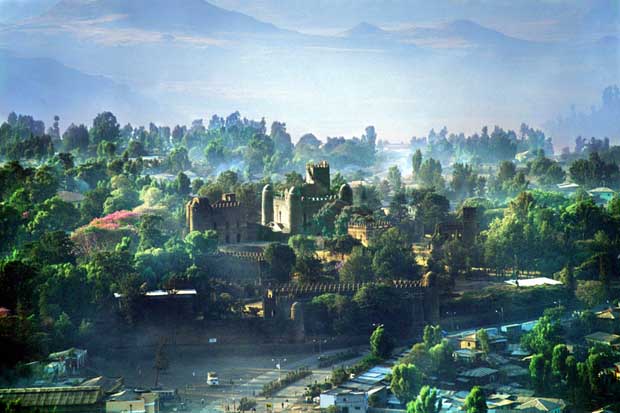
Gonder, Ethiopia


Source: http://www.etiopiamagica.it/index.htm

Tuesday, August 01, 2006

The Precious Advocate for Africa


Dr. Leonard H. Robinson, an advocate for progressive and peaceful Africa, passed away on Tuesday July 25, 2006 in Washington, DC. He was 63.

"He was a true servant of the public, whose leadership and dedication changed lives on two different continents….….He was committed to making Africa a full partner in the global community," said Judith McHale, president and CEO of Discovery Communications.

Dr. Robinson’s carrier in civil service started in the early 1960s as a Peace Corps volunteer in India from 1964 to 1967. Among many posts he held in the U.S. government, he served two terms as deputy assistant secretary of State for Africa.

In themid 1980s, he was a member of the Council on Foreign Relations.

Additionally, for six years, Dr. Robinson served as president of the U.S. African Development Foundation, which was established by Congress in 1981 to provide financial assistance for grassroots enterprises in Africa.

In early 1990s, he coordinated U.S. policy toward parts of Africa. He demonstrated his superior work in conflict resolution as the director of U.S. diplomatic efforts to end Liberia's civil war.

In 1997, Robinson established the LHR International Group, which is a firm that provided consulting services for African and Asian leaders.

To expand his effort to build support for African the United States, he joined the National Summit on Africa as a board member the same year. Mr. Robinson was also advisory councils of the National Peace Corps Association, and Discovery Channel's Global Education Fund.

In 2001, Mr. Robinson and colleagues founded The Africa Society. The mission of the Africa Society is to educate Americans about the greatness and the resourcefulness of Africa.

In 2004, the University of Virginia appointed Robinson as its first Diplomat Scholar in Residence.

Dr. Robinson was born in North Carolina. He attended Ohio State University and the State University of New York, Binghamton, the American University and Harvard's John F. Kennedy School of Government.

He received two honorary doctoral degrees and taught African Studies at the University of Massachusetts.

Among many of his valuable contribution to the development of Africa, his work on conflict resolution is important for the current and future generation. To mention some of his findings, “Simply put: the wars in Africa must stop!! (there are hopeful signs that resolutions are occurring in at least nine (9) conflict zones)… African-Americans - - as the core of the African Diaspora can and have played critical roles in helping to resolve and prevent conflict in Africa.”

According to The Africa Society, “Robinson is survived by two daughters, Rani Robinson of Washington, DC, Kemberley Robinson of Houston, Texas, his mother, Winnie T. Robinson of Durham, North Carolina, and a brother, Dr. Michael Robinson of Los Angeles, California.

A memorial service will be held on August 15 at the National Cathedral in Washington, DC at 10:30 am. Former U.S. Ambassador to the United Nations Andrew Young, who is chair emeritus of the Africa Society board, is scheduled to deliver the eulogy.”

Wednesday, July 26, 2006

The Candle


Journalist, Bapuwa Mwamba, was assassinated in Kinshasa on July 10, 2006.

Congolese journalists stopped working on July 18, 2006 to protest Mr. Mwamba’s killing.

Bapuwa Mwamba always yearned to return to his homeland while he was living in France. Eventually, he returned to Democratic Republic of Congo to directly contribute to the development of his land.

May God bless his soul and his effort to help Africa.

Monday, July 24, 2006

Brazil hosted Pan-African Intellectuals


The President of Brazil, Mr. Luiz Inácio Lula da Silva, hosted the Second Conference of Intellectuals from African and the Diaspora (CIAD) from 12 to 14 July 2006.

CIAD took place in Salvador, which is one of the predominantly black cities in Brazil.

The event was co-chaired by the Minister of Culture of Brazil, Gilberto Gil, representing the Diaspora, and Kenya's Wangari Maathai, 2004 Nobel Peace Price Laureate, representing the African Continent.

The general theme was “The Diaspora and African Renaissance,” aiming to create a strong working relationship between the Africans and the African Diaspora intellectuals.

African Union (AU) Commission Chairperson, Alpha Oumar Konaré, stated that although physically separated, Africans and the African Diaspora share the same values, history, culture, and destiny.

Mr. Konaré also expressed the belief that Africa's renaissance cannot be realized without the contribution of intellectuals from Africa and the Diaspora, and explained that the continent's fate will be transformed by solutions developed by Africans and implemented by Africans.

The "Salvador Declaration" was adopted at the end of the conference, which announced that Africa's Diaspora, scattered across the planet, has an essential role in the African renaissance and aspired to strengthen departments in African Union that deal with the Diaspora.

Participants included heads of states, ministers, Noble Prize winners, scientists, and many other Black intellectuals from around the world.

Prime minister Mrs. Portia Simpson-Miller of Jamaica, presidents Festus Mogae of Botswana, Pedro Pires of Cape Verde, Teodoro Obiang Nguema of Equatorial-Guinea and John Kufuor of Ghana, and Abdoulaye Wade of Senegal were among the leaders who participated on the conference. The total number of participants was estimated to be between 1,000-1,500 people.

The first CIAD was held in Dakar, Senegal, in October 2004. Brazil was selected to host the second CIAD because it is one of the countries with a large African population outside of Africa.

Wednesday, July 12, 2006

The President of Africa


The Pan-African Parliament elected the Dr. Getrude Mongela as the first president of Africa under the African Union. Dr. Mongela will be the highest ranking person in Africa until her term is over in 2009.

She is known around the world as “Mama Beijing.”

The Pan-African Parliament is one of the most important organs in the African Union because it is expected to unify Africa and the African Diaspora politically, economically and socially. The African Union inaugurated the Pan-African Parliament in Addis Ababa, Ethiopia, on March 18, 2004.

Most Africans who have heard about this gigantic legislative body are excited that the Pan-African Parliament will eventually have full law making and governing power over the individual African countries starting in 2009.

Dr. Mongela is expected to build up the current the Pan-African Parliament that has consultative and advisory powers only to a full Pan-African legislative office. The Pan-African Parliament (PAP) is run by legislators from 44 African counties.[1] Each African country is expected to bring five representatives to the Pan-African Parliament.

By law, at least one of the five representatives must be a woman.

Up until June 2006, the PAP also has four Vice-Presidents: Prof F. Jose Dias Van-Du’Nem, an Angolan, in charge of Southern Africa; Dr. Mohammed Lutfi Farahat, a Libyan, responsible for Northern Africa; Mrs. Loum N. Ne’loumsei Elise, a Chadian, in charge of Central Africa; and Mr. Jerome Sacca Kina Guezere, a Beninois, responsible for the west Africa.

The President of the PAP, Gertrude Mongella, is a Tanzanian woman. She is married and has four children.

She is also an international figure who has demonstrated her superior skills as a teacher, a human rights activist, peace maker, experienced diplomat, and strong politician.
Dr. Mongela has promised to work on conflict resolution, poverty reduction, and fighting HIV/AIDS in Africa. She has demonstrated ability to transform words into action on the international stage.

“She took an active leading role in setting up a mechanism which enables African women to participate effectively, at all decision-making levels, in the continent’s peace and development process,” according to the African Union.

In addition, her commitment to helping women around the word, specifically in China has earned her a pleasant nick name: “Mama Beijing.”

"If you want to be a leader, you have to be clear what you want and what you stand for. You must stand for principle. Principle will never let you down … You have to be able to choose what are the principles worth dying for … And you have to add on a little sacrifice. Leadership needs a lot of sacrifice - personal and public sacrifice."
Dr. Getrude Mongela


__________

[1] The 44 countries that are part of the Pan-African Parliament are Angola, Benin, Botswana, Burkina Faso, Burundi, Cameroon, Cape Verde, Central African Republic, Chad, Republic of Congo, Djibouti, Equatorial Guinea, Egypt, Ethiopia, Gabon, The Gambia, Ghana, Guinea, Kenya, Lesotho, Libya, Madagascar, Malawi, Mali, Mauritania, Mauritius, Mozambique, Namibia, Niger, Nigeria, Rwanda, Saharawi Arab Democratic Republic, Senegal, Sierra Leone, Somalia, South Africa, Sudan, Tanzania, Togo, Tunisia, Uganda, Zambia, and Zimbabwe. The list is expected to increase and include the African Diaspora.


Mandela & Ethiopia


"Ethiopia, always has a special place in my imagination and the prospect of visiting Ethiopia attracted me more strongly than a trip to France, England and America combined!!!"
Nelson Mandela